



Women Farmers See Little Benefit
By Mackie M. Jalloh
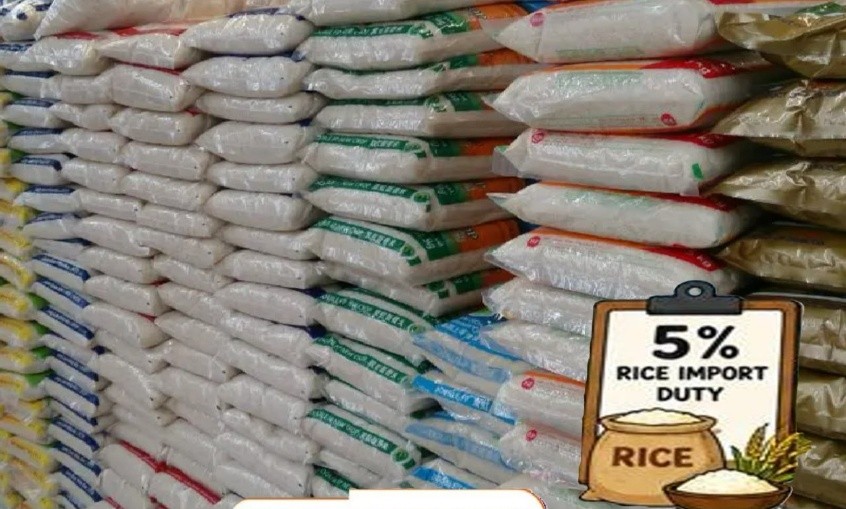
Sierra Leone’s policy to impose a 5 percent duty on imported rice has generated hundreds of millions of leones for agricultural development, but a new analysis suggests that only a small portion of the revenue has actually reached the fund established to support the sector.
The 50/50 Group and Budget Advocacy Network (BAN), with support from Christian Aid, say the government collected Le365.2 million from the rice import duty between 2024 and 2025. However, only Le31.9 million, equivalent to about 9 percent, was transferred to the Agricultural Development Fund (ADF).
The figures have raised questions over whether the revenue measure is achieving its broader policy objectives, particularly its potential to support women farmers and strengthen food production under the government’s Feed Salone programme.
The 5 percent rice import duty was reintroduced under the 2024 Finance Act as part of the Medium-Term Revenue Strategy (MTRS), with the expectation that proceeds would help mobilise resources for agricultural development.
However, the policy brief argues that the gap between revenue collected and funds transferred to the ADF has weakened the connection between the tax and the agricultural investments it was intended to finance.
Women Farmers Carry the Burden
The report places particular emphasis on women, who play a major role in Sierra Leone’s agricultural economy and are central to household food production and food security.
According to the analysis, women farmers and low income households have faced increased pressure as the cost of rice rose. Some households reportedly responded by reducing the quantity of rice purchased, cutting consumption or switching to alternative foods that they may not otherwise prefer.
For women involved in farming, the concern goes beyond the price of food. The report argues that they have not benefited sufficiently from agricultural programmes that could improve their productivity and income.
It notes that some government support initiatives tend to benefit larger or better established producers, while small scale women farmers continue to face barriers to mechanisation, finance, tax incentives and other forms of agricultural support.
This, the report suggests, creates a contradiction in which women can be affected by policies that increase the cost of a major staple food while receiving limited investment from the revenue generated by that same policy.
Revenue Without Proportionate Investment
The policy brief questions the effectiveness of collecting agricultural related revenue without ensuring that the money reaches the sector in a timely and transparent manner.
Of the Le365.2 million generated from the rice import duty, only Le31.9 million reached the ADF during the period examined.
The organisations argue that such a disparity undermines the intended purpose of the duty and limits the resources available for investments that could increase domestic production and reduce Sierra Leone’s vulnerability to imported food.
Although the government subsequently introduced a rice pricing formula aimed at stabilising prices, the report maintains that price-management measures alone cannot address the structural challenges confronting smallholder farmers.
It argues that sustained investment in agricultural inputs, mechanisation, access to finance and productive infrastructure is equally important, particularly for women farmers operating on a smaller scale.
Call for Greater Transparency
The organisations behind the policy brief are calling for stronger mechanisms to track the revenue from the rice import duty from collection to expenditure.
They recommend that the Ministry of Finance ensure that all revenue generated from the duty is transferred to the Agricultural Development Fund on a quarterly basis.
They also want the Ministry of Agriculture and Food Security to allocate at least 30 percent of rice import-duty revenue to women farmers, in line with the objectives of the Feed Salone programme and the 2023 Gender Equality and Women’s Empowerment (GEWE) Act.
The National Revenue Authority (NRA), meanwhile, is being urged to publish quarterly reports detailing the amount collected through the rice import duty.
Such disclosures, the report argues, would allow citizens, farmers, civil society organisations and policymakers to determine whether the money collected through the duty is actually being channelled towards the agricultural objectives for which it was introduced.
Beyond Revenue Collection
The findings have broader implications for Sierra Leone’s fiscal and agricultural policies.
While import duties can provide government with additional revenue, the policy brief argues that taxation should also be assessed by its social and economic impact.
For a country seeking to increase domestic food production, improve food security and empower women economically, the organisations say revenue generated from a staple commodity such as rice should produce visible benefits within the agricultural sector.
The report therefore calls for a more gender-responsive approach to the management of agricultural revenues, arguing that women farmers should not merely be viewed as beneficiaries of development programmes but as key economic actors whose access to resources can directly influence food production and household welfare.
The organisations maintain that the rice import duty could still become an important financing mechanism for Sierra Leone’s agricultural transformation if revenue collection is matched by transparent transfers, targeted investment and stronger accountability.
They argue that ensuring a greater share of the money reaches smallholder and women farmers could help improve productivity, strengthen food security and make the Feed Salone agenda more inclusive.
The central challenge, therefore, is no longer simply how much revenue the rice duty can generate, but whether the money collected is reaching the farmers and communities that the policy was ultimately intended to support.