



By Mackie M. Jalloh
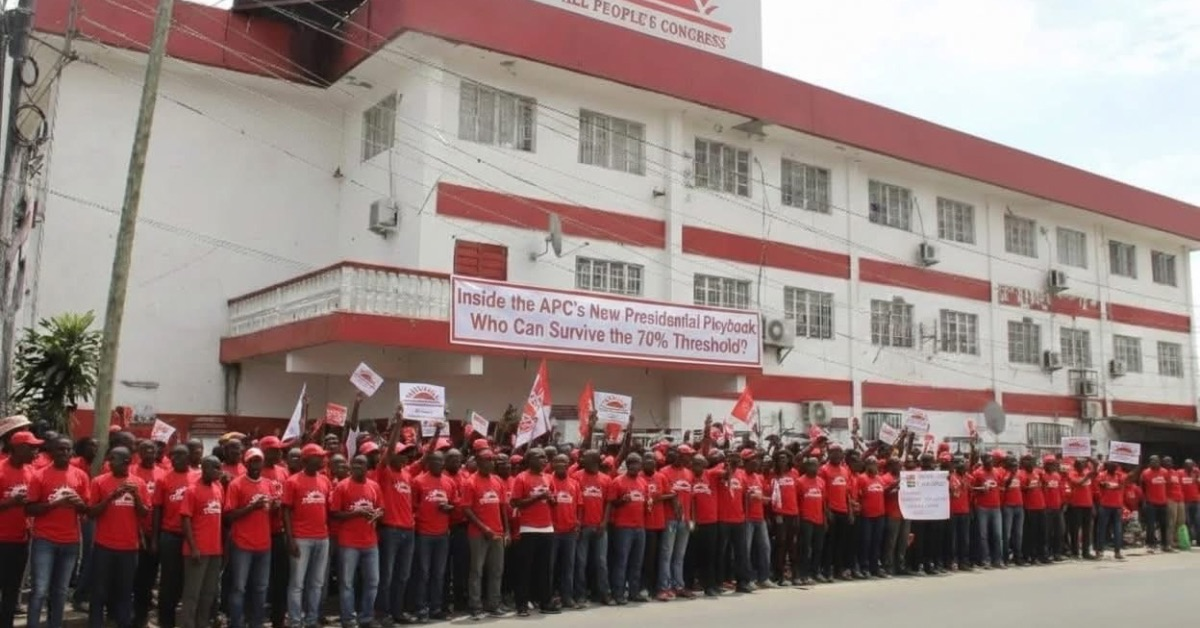
Sierra Leone’s political landscape has taken a notable turn as the All People’s Congress (APC) formally re-enters the country’s governance space, bringing an end to a prolonged period of political uncertainty, disengagement, and institutional tension.
For months, the absence of full participation by the APC in governance processes had raised concerns among political observers, civil society actors, and international partners about the stability and inclusiveness of Sierra Leone’s democratic system. The situation had created a governance gap, particularly in areas requiring bipartisan engagement, such as parliamentary oversight, policy dialogue, and national cohesion.
The breakthrough became public during a widely followed “Truth Morning Devotion,” where senior APC figure Aminata Sesay disclosed that the party had officially resumed its governance responsibilities. While the platform of the announcement may have appeared informal, its political weight was unmistakable, signaling an internal consensus within the party to shift strategy from disengagement to re-engagement.
That position was later given formal government backing by Chernor Bah, Sierra Leone’s Minister of Information and Civic Education. In a clear and definitive statement, Bah confirmed that the APC’s return was immediate and conclusive, effectively closing a chapter that had been marked by political friction and uncertainty.
The APC’s re-entry into governance is not merely symbolic it has structural and functional implications. As one of the country’s dominant political parties, its participation is critical to ensuring a balanced democratic process. Governance in Sierra Leone operates within a multi-party framework where opposition involvement is essential for accountability, legislative scrutiny, and policy legitimacy. The APC’s absence had weakened these mechanisms, making its return a significant corrective step.
Political analysts suggest that this development points to behind-the-scenes negotiations and confidence-building measures between the APC and the ruling administration. While the details of such engagements remain largely undisclosed, the outcome reflects a mutual recognition of the need for stability and cooperation in addressing national challenges, including economic pressures, youth unemployment, and public sector reforms.
Beyond elite political circles, the implications are equally important for ordinary citizens. A functioning governance system that includes both ruling and opposition actors tends to foster greater trust in public institutions. It also reduces the risk of political polarization, which can undermine development efforts and social cohesion.
However, the return of the APC to governance also raises critical questions about sustainability. Observers argue that the real test lies not in the announcement itself, but in the consistency of engagement moving forward. Will the APC maintain constructive participation, or will underlying grievances resurface? Similarly, will the government create sufficient space for meaningful opposition input, or will tensions re-emerge under new pressures?
Civil society groups have already begun calling for transparency around the terms of re-engagement, emphasizing that inclusive governance should translate into tangible outcomes for citizens rather than remain a political arrangement at the top.
In the broader democratic context, this moment could mark either a reset or a temporary truce. Its long-term significance will depend on how both the APC and the government navigate their renewed relationship, manage dissent, and prioritize national interest over partisan rivalry.
What is clear, however, is that Sierra Leone has entered a new phase one that reopens the door for dialogue, shared responsibility, and potentially more stable governance if carefully managed.