


By Marion (Rion) Bangura
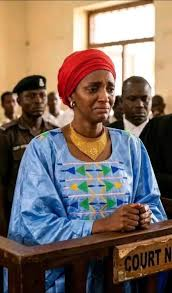
Popular Sierra Leonean model and entertainer Zainab Sheriff has been sentenced to four years and two months in prison following her conviction on charges of incitement and the use of threatening language. The ruling was delivered on April 14, 2026, at Magistrate Court No. 1 by presiding magistrate Brima Jah.
The case, prosecuted under the provisions of the Public Order Act of 1965, centered on statements attributed to Sheriff that the court found capable of provoking unrest and threatening public peace. According to the court’s findings, her conduct crossed the legal threshold from protected speech into actionable incitement, a distinction that continues to generate debate in Sierra Leone’s legal and media landscape.
Sheriff, who also serves as chairperson of the organization Wi Duti, is a high profile public figure whose influence extends across entertainment and social advocacy spaces. Her conviction has therefore amplified the significance of the ruling, placing it at the intersection of celebrity influence, civic responsibility, and the boundaries of lawful expression.
In delivering the sentence, Magistrate Jah emphasized the seriousness of maintaining public order, particularly in a society where public commentary especially from influential personalities can rapidly shape public sentiment. The court ruled that the penalties for both charges would run concurrently, meaning Sheriff will serve a total of four years and two months rather than separate consecutive terms.
Legal observers note that the case underscores the enduring relevance and controversy of the Public Order Act of 1965, a law frequently scrutinized for its application in cases involving speech. Critics argue that aspects of the law can be broadly interpreted, potentially limiting freedom of expression, while supporters maintain that it remains a necessary instrument for preventing disorder and safeguarding national stability.
Sheriff’s sentencing has triggered widespread public discourse, particularly among media practitioners, civil society actors, and legal analysts. Many are now questioning where the line should be drawn between free speech and speech deemed dangerous or inflammatory. For public figures, the case sends a clear signal: influence carries legal and ethical obligations, especially in an era dominated by rapid digital communication and mass audience reach.
At the same time, the ruling raises broader concerns about proportionality and consistency in the enforcement of speech related laws. Observers are likely to monitor whether similar standards will be applied across future cases involving political actors, activists, and other influential voices.
As Zainab Sheriff begins her sentence, her case is poised to become a reference point in Sierra Leone’s evolving legal and societal conversation around expression, accountability, and the limits of public discourse. Whether viewed as a necessary enforcement of the law or a contentious application of it, the outcome undeniably reinforces the high stakes attached to speech in the public arena.