



By Marion Rion Bangura
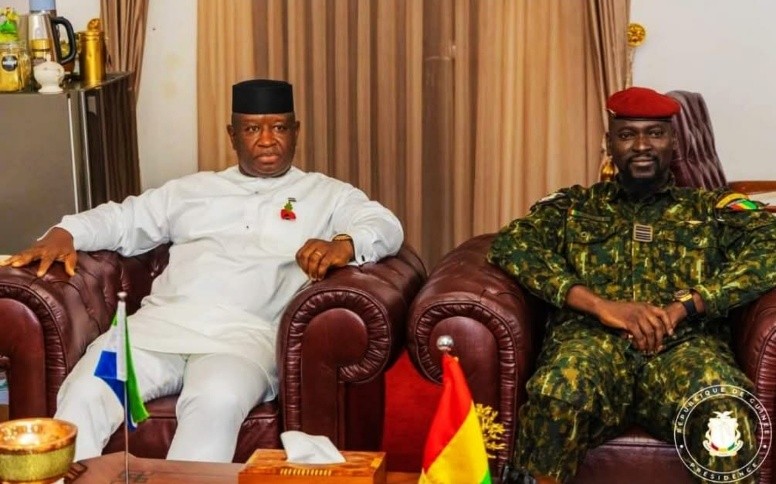
The presence of Guinea’s President Mamady Doumbouya at the 69th Ordinary Session of the ECOWAS Authority of Heads of State and Government in Sierra Leone has placed renewed attention on the long-running Yenga territorial dispute between Freetown and Conakry.
The ECOWAS summit, held in Lungi on 19 July 2026 under the chairmanship of President Julius Maada Bio, brought together regional leaders to discuss the future of West African integration, peace and security, democratic governance and regional cooperation.
But for Sierra Leone, the gathering also carried a sensitive bilateral dimension. President Doumbouya’s attendance came against the backdrop of unresolved questions surrounding Yenga, a border area in Kailahun District that Sierra Leone maintains is its sovereign territory.
The issue has remained a source of tension between the two neighbouring countries for decades. Although Guinea was invited to deploy troops in the area during Sierra Leone’s civil war to help secure the border, the continued presence of Guinean forces after the conflict has repeatedly triggered diplomatic concerns and public debate in Sierra Leone.
The matter has been the subject of previous bilateral engagements and agreements, but concerns over the full implementation of those understandings have continued to linger.
The 69th ECOWAS Summit therefore created a significant diplomatic setting, bringing President Bio and President Doumbouya together under the same regional platform at a time when Sierra Leone continues to insist on the protection of its territorial integrity.
However, the final communiqué of the summit, as publicly presented, focused broadly on regional integration, peace, security, democratic governance and economic cooperation. It did not publicly announce a specific resolution of the Yenga dispute.
That silence is likely to keep the issue alive in Sierra Leone’s national conversation, particularly as citizens continue to demand clarity over the status of the territory and the future of Guinean military personnel in the area.
The summit nevertheless provided an opportunity for both countries to engage within the wider framework of regional diplomacy. ECOWAS has historically played a role in addressing disputes among Member States, making the regional bloc a potential platform for dialogue should the issue require further multilateral attention.
The presence of President Doumbouya in Sierra Leone was also significant from the perspective of regional cooperation. Alongside leaders from across West Africa, he participated in discussions aimed at strengthening integration at a time when the region faces political, security and economic challenges.
For President Bio, who chaired the summit, the meeting presented a delicate balance between advancing regional unity and defending Sierra Leone’s national interests.
The Yenga question remains particularly sensitive because it concerns sovereignty, territorial security and the historical relationship between two neighbouring countries whose populations share deep social and cultural ties.
While the ECOWAS summit ended with renewed calls for regional cooperation, the absence of a publicly announced breakthrough on Yenga means the dispute remains an unresolved chapter in Sierra Leone-Guinea relations.
The immediate diplomatic challenge now lies in ensuring that the pursuit of regional integration does not overshadow unresolved bilateral questions. For Sierra Leone, the expectation remains that any future engagement over Yenga will lead to a clear, peaceful and definitive resolution that respects the country’s territorial integrity while preserving its long-standing relationship with Guinea.