



By Mackie M. Jalloh
The Sierra Leone Association of Journalists (SLAJ), the Sierra Leone Reporters Union (SLRU), and the International Federation of Journalists (IFJ) have called for urgent reforms to strengthen journalists’ welfare and ensure strict enforcement of existing labour and media laws in Sierra Leone.
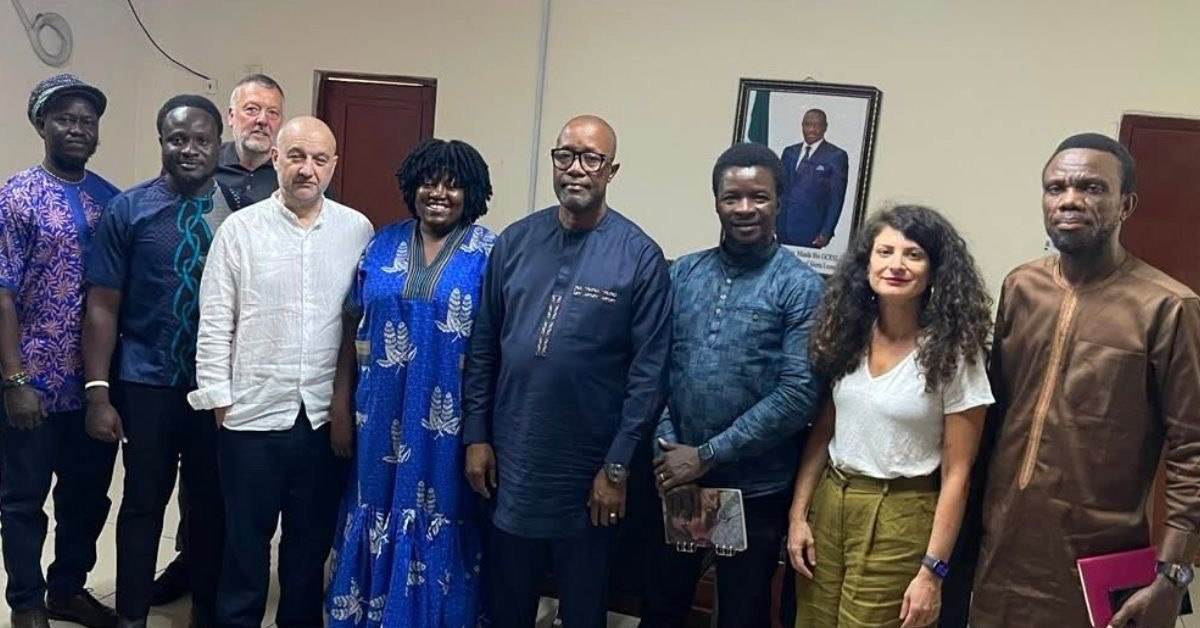
The appeal was made during high level engagements with the Chairman of the Independent Media Commission (IMC), Joseph E. Kapuwa Esq., and the Minister of Employment, Labour and Social Security, Mohamed Rahman Swaray. The discussions focused on improving working conditions, ensuring fair remuneration, and expanding social protection for journalists across the country.
The delegations emphasised that journalists play a critical role in safeguarding democracy and accountability, and therefore deserve decent wages, safe working environments, and access to social security benefits.
SLAJ President, Alhaji Manika Kamara, said the initiative forms part of a broader national advocacy drive aimed at addressing long-standing welfare challenges in the media sector. He noted that many journalists, including experienced professionals, retire without pensions, end-of-service benefits, or adequate social protection.
According to him, SLAJ has intensified consultations with government institutions, media owners, and stakeholders following confirmation of the IFJ delegation’s visit to Sierra Leone. He stressed the need for practical solutions that can be implemented without undermining media sustainability.
The IFJ delegation, led by General Secretary Anthony Bellanger, urged the full enforcement of the IMC Act of 2020 and the Labour Act of 2025, particularly provisions requiring payment of at least the national minimum wage and compliance with social security obligations.
Bellanger stated that improving labour standards in the media sector should not be seen as a threat to press freedom, but rather as a necessary step toward strengthening professional independence and ethical journalism.
He added that journalists who are economically vulnerable are more exposed to exploitation and undue influence, which can undermine the credibility of the media.
IFJ Expert Adviser on Journalists’ Welfare, Jeremy Dear, presented findings highlighting serious gaps in employment conditions within the media sector. He revealed that a significant proportion of journalists are either underpaid, irregularly paid, or not covered by social security systems.
According to his findings, about 47 percent of journalists are not registered with NASSIT, while nearly 90 percent of media institutions are either failing to remit statutory contributions or not paying the minimum wage. He also noted that 26 percent of journalists do not receive regular monthly salaries, with many working without contracts or formal employment protections.
Despite the existence of progressive labour and media laws in Sierra Leone, Dear said enforcement remains weak. He pledged continued collaboration with SLAJ and SLRU to promote fair pay, medical coverage, pensions, and other employment rights.
Responding to the concerns, IMC Chairman Joseph E. Kapuwa acknowledged the challenges of enforcing compliance within a sector where many media owners are themselves journalists. He assured stakeholders that the Commission remains committed to implementing the IMC Act and ensuring adherence to labour regulations.
He stressed that while press freedom must be protected, compliance with labour and welfare standards is essential for professionalising the media industry.
Minister Mohamed Rahman Swaray described journalists’ welfare as a long-standing priority, citing his previous experience as Minister of Information and Communications. He referenced past reforms, including the repeal of criminal libel laws and the introduction of frameworks aimed at improving media regulation and welfare.
The Minister reaffirmed government’s commitment to working with SLAJ and SLRU to ensure media employers comply with labour laws, particularly regarding wages, social security contributions, and workers’ rights.
The engagements are seen as a significant step in ongoing efforts to secure decent work conditions, fair remuneration, and improved social protection for journalists in Sierra Leone.