



By Mackie M. Jalloh
Sierra Leone’s media industry has taken a significant step toward creating safer and more inclusive workplaces after media stakeholders endorsed a Gender-Responsive Safeguarding Charter designed to prevent sexual harassment, exploitation, abuse, discrimination and retaliation across the sector.
The commitment emerged from a policy dialogue that brought together media owners, managers, journalists, regulators, professional associations and civil society representatives to confront what stakeholders described as a persistent but frequently underreported challenge within newsrooms and other media working environments.
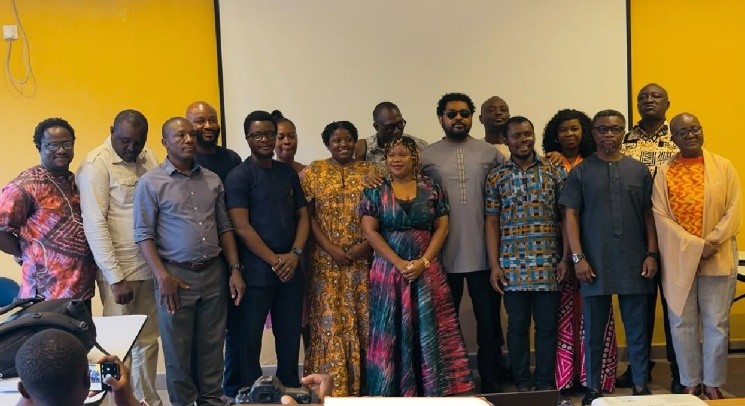
The Policy Dialogue Forum on Gender Justice in the Media, organised by Women in the Media Sierra Leone (WIMSAL), with support from Comic Relief and in partnership with BBC Media Action, was held at the Civil Service Training College at Tower Hill, Freetown.
Held under the theme “Advancing Gender-Responsive Safeguarding Policies in Media Houses,” the one-day forum provided a platform for stakeholders to examine evidence on sexual harassment in the media and consider institutional measures capable of preventing abuse while protecting those who report it.
The decision to adopt the charter was informed by findings from a 2025 study conducted by the World Association of News Publishers (WAN-IFRA) Women in News, in partnership with City, University of London’s St George’s and BBC Media Action.
The study covered 21 countries across Sub-Saharan Africa, the Arab region, Southeast Asia and Ukraine, and highlighted significant gender disparities in experiences of harassment among media professionals.
Presenting the Sierra Leone findings, BBC Senior Research Officer Josephus Kongo said 27 percent of the 298 media professionals surveyed in the country reported experiencing sexual harassment in their newsroom or workplace.
Although the figure was below the 33 percent average recorded across Sub-Saharan Africa, the gender differences were particularly concerning.
Kongo reported that online sexual harassment was the most common form identified in the Sierra Leone survey. Fifty-seven percent of women surveyed said they had experienced online sexual harassment, compared with 32 percent of men.
Verbal harassment also showed a substantial gender gap, with 54 percent of women reporting such experiences compared with 26 percent of men. Physical sexual harassment was reported by 21 percent of women and nine percent of men.
The research further exposed a major weakness in institutional responses: many affected media workers do not report their experiences.
According to Kongo, 72 percent of women and 81 percent of men who experienced verbal sexual harassment did not report the incidents to their employers. The figures were even higher for online harassment, with 76 percent of women and 82 percent of men choosing not to report their experiences.
These findings placed reporting, confidentiality, institutional trust and protection from retaliation at the centre of discussions during the forum.
Delivering the keynote address on “Gender Justice as a Cornerstone of Media Freedom,” BBC Media Action Director Musa Sangarie argued that media freedom cannot be fully realised where women are unable to work safely and participate equally in the profession.
Sangarie said gender justice should be considered an integral part of media freedom rather than an issue that can be addressed separately. He urged media institutions to develop and enforce effective anti-harassment policies, establish confidential complaint channels and ensure that individuals who report abuse are protected from retaliation.
He also called for greater investment in women’s leadership and stronger representation of women in editorial management, decision-making and other senior positions, while urging media organisations to respond to the growing problem of technology-facilitated gender-based violence.
The National Coordinator of the Media Reform Coordinating Group (MRCG), Dr Francis Sowa, similarly stressed that gender justice has implications for the credibility and sustainability of the media industry.
He advocated stronger internal systems, including accessible reporting procedures, clear processes for investigating allegations, protection against retaliation, institutional accountability and regular training for media managers and employees.
Sierra Leone Association of Journalists (SLAJ) President Alhaji Manika Kamara described safeguarding as a professional responsibility that media houses could no longer afford to treat as optional.
Kamara called for clear institutional policies, confidential reporting systems and fair procedures for handling allegations, while endorsing the safeguarding charter as an important framework for collective action.
He stressed that sexual harassment should not be regarded solely as a women’s issue, but as a professional, institutional and human rights concern affecting the integrity of the entire media sector.
The Sierra Leone Association of Women in Journalism (SLAWIJ) President, Millicent Kargbo, drew attention to the increasing risks faced by women journalists beyond the traditional newsroom.
Referencing SLAWIJ’s 2022 research project, “Threats Against Public-Facing Women in Sierra Leone,” Kargbo said 64 percent of women journalists and human rights defenders surveyed had experienced harassment, insults or threats online and offline.
She said the proposed charter could provide media institutions with practical mechanisms for dealing with harassment in both physical workplaces and digital spaces.
The Sports Writers Association of Sierra Leone (SWASAL) President, Sahr Morris Jr, also backed the initiative, pointing to the particular challenges confronting female sports journalists working in environments that are often heavily male-dominated.
From stadiums and press boxes to field assignments and sporting events, he said female journalists can face unique safety and harassment concerns that require gender-responsive institutional safeguards.
Meanwhile, Independent Media Commission Executive Secretary Khalil Kallon maintained that regulation alone would not be sufficient to eliminate harassment and abuse from the media.
He called for leadership commitment, effective internal complaint mechanisms, survivor protection and a workplace culture where media workers can perform their duties without fear or intimidation.
Lawyer Paul Kallon, who presented the charter, explained that the Gender-Responsive Safeguarding Policy for Media Institutions, 2026 establishes minimum standards for preventing sexual exploitation, abuse and harassment, eliminating gender-based discrimination, promoting equality and strengthening accountability.
The framework covers a broad range of individuals working within or alongside media institutions, including proprietors, directors, managers, editors, journalists, freelancers, interns, volunteers and contractors.
Its provisions extend beyond the traditional newsroom to field assignments, official travel, accommodation, professional events and work-related digital communication.
Among the measures proposed are confidential and accessible reporting channels, designated safeguarding focal persons, regular training, protection for complainants and witnesses, survivor support and impartial investigation procedures.
The charter also expressly prohibits sexual harassment, sexual exploitation and abuse, gender-based violence, discrimination, intimidation, coercion, abuse of professional authority, technology-facilitated sexual and gender-based abuse and retaliation.
Another significant component calls for meaningful representation of women in media governance, management, editorial leadership, recruitment, promotion, professional development and safeguarding structures.
Copies of the charter were distributed to selected media houses for consideration, with institutions expected to sign and return the documents as part of the endorsement process.
WIMSAL President Eastina Taylor-Tucker said the organisation intends to organise further training for media owners and managers, subject to the availability of funding. She emphasised that sustained training and engagement would be necessary to ensure that the commitments adopted at the forum translate into functioning safeguards within individual media institutions.
The forum ultimately shifted the conversation from acknowledging the existence of harassment to examining how media institutions can prevent it, respond to complaints and hold perpetrators accountable.
Stakeholders agreed that adopting a policy is only the beginning. The effectiveness of the charter will depend on implementation, monitoring, enforcement, leadership commitment and the willingness of media institutions to create reporting systems that workers can trust.
For Sierra Leone’s media sector, the initiative places workplace safety alongside professional ethics and media freedom, reinforcing the principle that journalists cannot effectively serve the public when they themselves operate in environments characterised by harassment, discrimination or fear.
The challenge now is to turn the commitments adopted in Freetown into measurable institutional practice and ensure that every journalist and media worker particularly women can pursue their profession with dignity, equality and security.