



By Marion Rion Bangura
The International Monetary Fund (IMF) has cautioned that although Sierra Leone has implemented several public financial management reforms in recent years, the credibility of its national budget remains weak due to persistent structural challenges, including unrealistic revenue projections, shifting policy priorities, and inconsistent implementation of fiscal plans.
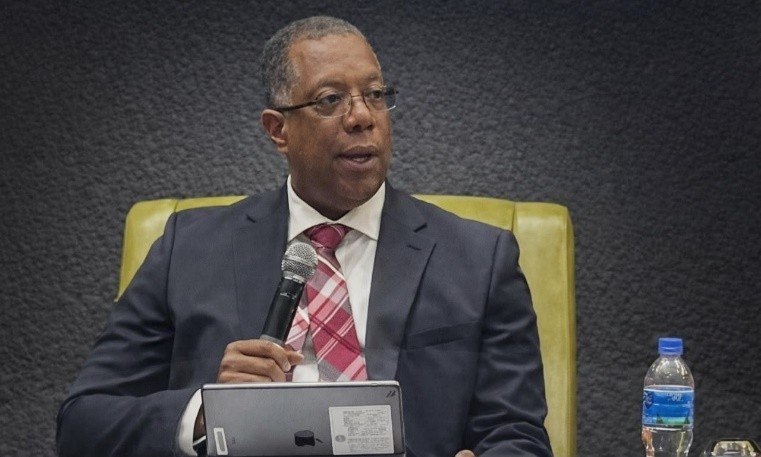
This assessment was made by IMF Resident Representative Wayne Mitchell while speaking at a policy forum organized by the Budget Advocacy Network (BAN) at the Radisson Blu Hotel in Aberdeen, Freetown. The forum brought together policymakers, civil society actors, and governance stakeholders to examine the state of public financial management and accountability in the country.
Mitchell acknowledged that Sierra Leone has recorded measurable progress under its 2023–2027 reform agenda. He highlighted improvements in the use of the Integrated Financial Management Information System (IFMIS), which has enhanced tracking of public expenditures and reduced leakages. He also noted stronger payroll controls, improved debt management systems, and more structured financial reporting mechanisms that have contributed to increased transparency in government operations. According to recent IMF evaluations, these reforms have helped narrow the domestic primary deficit, signaling some degree of fiscal consolidation.
Despite these gains, Mitchell warned that significant weaknesses continue to undermine the effectiveness of the budgeting process. He emphasized that the core problem lies in the disconnect between budget planning and execution, with revenue and expenditure estimates often based on overly optimistic assumptions. In many cases, he said, budgets are revised multiple times during implementation due to new policy introductions or reprioritization of spending that were not initially accounted for.
He stressed that such frequent reallocations weaken the credibility of the original budget framework, reduce predictability in public spending, and ultimately erode public trust in government financial planning.
The IMF official also raised concerns about systemic vulnerabilities in procurement processes, noting that gaps in oversight can create opportunities for inefficiency and corruption. He pointed to ongoing challenges in the extractive sector, particularly in ensuring transparency around mining revenues and the disclosure of beneficial ownership structures. These weaknesses, he said, limit the country’s ability to fully benefit from its natural resource wealth.
Another major concern highlighted was the continued financial strain posed by loss-making state owned enterprises, which drain public resources and add pressure to an already constrained fiscal space. Combined with Sierra Leone’s relatively low tax-to-GDP ratio, these factors increase dependence on borrowing and external donor assistance.
Mitchell warned that this reliance on external support may become increasingly unsustainable as global aid flows tighten, urging authorities to prioritize domestic revenue mobilization and improve efficiency in public spending. He called for more realistic budgeting practices, fewer supplementary budgets, and clearer communication whenever fiscal adjustments become necessary.
He also referenced ongoing challenges such as fuel pricing and subsidy management, arguing that such issues underscore the need for transparent and well-communicated policy decisions that balance economic realities with social protection for vulnerable citizens.
Beyond government reforms, Mitchell emphasized the critical role of civil society organizations in strengthening accountability. He urged advocacy groups to monitor whether budget allocations actually reach intended public services such as health facilities, education institutions, and local development projects. He further stressed the importance of competitive procurement processes and the enforcement of audit recommendations.
According to him, audit findings should not remain procedural documents but must result in meaningful consequences when irregularities are identified. He also called for stronger parliamentary oversight and the imposition of real sanctions in cases of non-compliance, describing these measures as essential pillars of good governance.
In his concluding remarks, Mitchell underscored that technical reforms alone are insufficient without political will and institutional enforcement. He argued that sustainable improvements in public financial management require active citizen engagement, stronger institutions, and consistent accountability mechanisms.
“Budget transparency is not a gift governments give. Budget credibility is not something technocrats achieve behind closed doors. Both are standards that civil society claims and enforces,” he stated, reinforcing the need for collective responsibility in strengthening Sierra Leone’s fiscal governance framework.