



By Mackie M. Jalloh
The High Court of Sierra Leone has commenced proceedings in a case involving allegations of forced Female Genital Mutilation (FGM), with five individuals standing trial over claims that a young woman was unlawfully initiated into the Bondo Society and subjected to female genital cutting against her will.
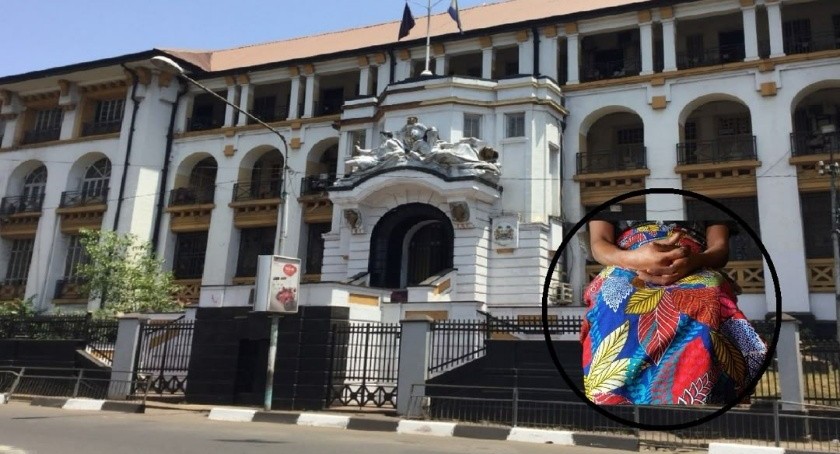
The matter came before Justice Tonia Barnett at the High Court in Freetown, where the accused were formally arraigned on charges of conspiracy and causing grievous bodily harm under the Offences Against the Person Act, 1861.
According to the prosecution, the alleged incident occurred on 7 May 2026 at the Quarry Moyeba Community in Kissy, where the complainant claimed she was forcibly taken and initiated into the Bondo Society by a group of traditional practitioners commonly referred to as “soweis.”
In her testimony before the court, the complainant alleged that she was subjected to female genital cutting without her consent and was subsequently held against her will. She further stated that she eventually managed to escape from the location before reporting the matter to the Ross Road Police Station on 28 May 2026, prompting a police investigation.
Following the investigation, prosecutors filed charges against Mariama Kargbo, alias Kuttie; Ramatu Turay, alias Waka Pa Dem; Mabinty Bangura, alias Sampa; Adama Kamara, also known as Nanday Porto or Nandewa; and Abubakarr Fadika, alias DJ Bakarr.
The prosecution alleges that the five accused persons acted together in carrying out the initiation and unlawfully maimed the complainant by removing or injuring her clitoris, resulting in grievous bodily harm. The accused have been indicted for conspiracy and for causing grievous bodily harm contrary to Section 18 of the Offences Against the Person Act, 1861.
The commencement of the trial has drawn public attention because it touches on the intersection of criminal law, traditional cultural practices and the protection of women’s and girls’ rights in Sierra Leone. While the Bondo Society remains an important cultural institution in many communities, allegations of forced initiation and non consensual FGM have increasingly become matters of legal scrutiny where criminal conduct is alleged.
During the initial hearing, the prosecution outlined the circumstances surrounding the alleged offence and presented the complainant’s account before the court. The defence is expected to challenge the evidence through cross-examination as the trial progresses.
Justice Barnett adjourned the matter to 20 July 2026, when the complainant is expected to return to the witness stand for cross-examination by defence counsel.
The case remains before the High Court, and the accused persons are presumed innocent unless and until proven guilty in accordance with the law.