



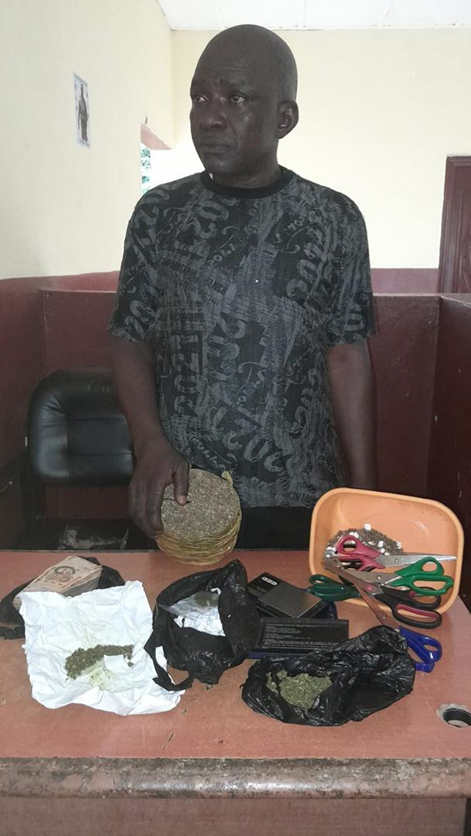
In the heart of Sierra Leone’s southern city of Bo, the recent police raid that brought down one of the country’s most notorious drug lords, “De-De Maxwell,” has ignited both celebration and reflection. The dramatic operation, which unfolded on September 25, 2025, marked a turning point in Sierra Leone’s decades-long struggle against the narcotics trade that has hollowed out communities and devoured its youth. Yet, behind the jubilation lies a sobering truth—arresting one man may not be enough to halt a drug epidemic deeply rooted in corruption, despair, and institutional failure.
For over forty years, Maxwell, a 68-year-old local kingpin, operated as the untouchable face of Bo’s underworld. His empire extended beyond the province, fueled by a network of small-time dealers and compromised officers who kept his trade alive. Residents knew his name, feared his reach, and lamented the power he wielded over the city’s youth. To many, he symbolized the moral decay that drugs have inflicted on Sierra Leone’s social fabric.
The breakthrough came when Assistant Inspector General of Police (AIG) Andrew Mustapha Kamara and Bo West Local Unit Commander (LUC) Augustine Kabbia led a daring raid on Maxwell’s fortified residence. Police recovered large quantities of narcotics and paraphernalia linked to ongoing distribution. His arrest sent shockwaves through Bo’s neighborhoods. Crowds poured into the streets in rare applause for law enforcement—an outburst of long-suppressed relief that justice had, at least once, prevailed.
Still, experts and community elders caution that this success may only scratch the surface. The rise of “kush,” Sierra Leone’s deadly synthetic drug, has outpaced enforcement and overwhelmed public health systems. Cheap, addictive, and accessible, kush has become a national catastrophe—destroying young lives, fueling crime, and stretching medical facilities to their breaking point. “These drugs are killing our children,” lamented Madam Kaide Sowa, a mother from Bo whose university-aged son dropped out after becoming addicted. “If the government doesn’t act fast, we will lose an entire generation.”
Government data supports her fears. Since 2023, kush-related hospital admissions have soared by more than 300%, with mental health centers in Freetown and Bo unable to keep up. Users, often teenagers or unemployed youth, are drawn to the drug’s cheap high—sometimes as little as one dollar per hit—but quickly spiral into dependency and psychological collapse. The tragic effects are visible everywhere: abandoned schools, crime-ridden streets, and young men wandering in zombie-like states.
The supply chain behind Sierra Leone’s drug epidemic runs deep and international. Synthetic ingredients flow in through poorly monitored borders, particularly from ports in Guinea, and enter the country via corrupt channels. Investigations suggest that local traffickers like Maxwell are merely the surface actors in a transnational web connecting Asian chemical suppliers, West African smugglers, and domestic power brokers. “Without confronting the higher-ups—the financiers and facilitators—these arrests will mean little,” warns a legal analyst in Bo.
Civil society groups and human rights organizations are now urging Inspector General William Fayia Sellu to reform the police structure itself, beginning with the transfer of officers who have served too long in one post. Such prolonged tenures, they argue, breed familiarity and corruption, blurring the line between law enforcement and lawbreakers. “Rotations are essential if the police are to regain integrity,” said a local activist.
In March 2025, the government launched its “Youth Champions Program” to strengthen community resilience against drugs through education and rehabilitation, but progress remains uneven. Many argue that without stronger mental health systems, tighter border controls, and transparent prosecution of officials involved in trafficking, the initiative risks being symbolic rather than transformative.
The fall of De-De Maxwell may signal a new chapter for Bo, but it is far from the final one. Sierra Leone’s fight against narcotics demands not just raids and arrests, but reform, accountability, and compassion. As the cheers fade and the dust settles on Maxwell’s empire, one message resonates through the streets of Bo: the battle for the nation’s future will not be won in one night—it will be fought in every home, every school, and every heart determined to rise above the shadows.