



By Mackie M. Jalloh
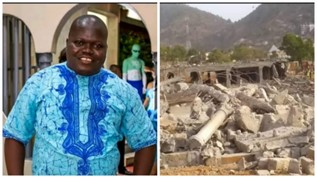
A year after a contentious demolition in Angola Town, affected homeowners — including veteran journalist Alex Lawrence Koroma — remain trapped in legal limbo, pleading for President Julius Maada Bio to intervene and restore their rights. What began as a state action by the Ministry of Lands has since unfolded into a bitter dispute over due process, notice, compensation and the alleged transfer of community land to foreign investors.
Residents say the demolitions were carried out without warning, without a court order, and without any prior engagement by the Ministry to verify claims or settle competing land interests. Many of those affected, including Koroma — formerly of Radio Democracy (98.1 FM) and Managing Editor of Drone Newspaper — say they invested their life savings in building homes on the plots, only to see their properties razed and their economic security evaporate overnight.
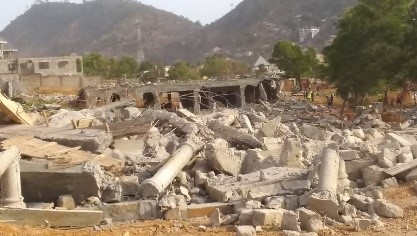
“The structures on my land were built with my hard-earned money,” Koroma told this reporter. “To take them away without due process is an assault on our rights and our dignity.” He and other victims say there was no formal eviction notice, no invitation to discuss the title or occupation history, and no court order authorizing forced demolition.
Despite appeals to the Ministry and requests for clarity, the affected families say they have been met with silence. The issue was referred to Parliament’s Committee on Lands, which launched an inquiry — but months on, the committee’s findings have not been made public and no remedial action has been taken. For the landowners, the lack of transparency has deepened the sense of injustice and suspicion that public office is being wielded to favour investors over citizens.
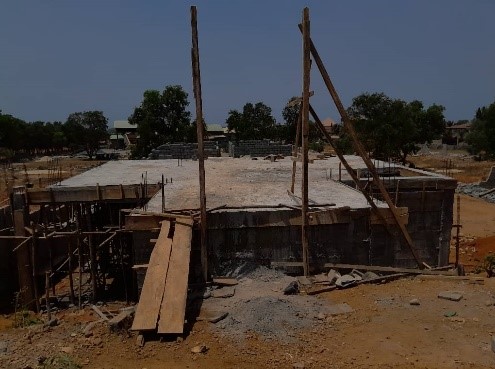
Human rights campaigners have expressed alarm, framing the episode as more than a local land dispute. They argue that the forcible removal of residents without proper legal safeguards — notice, opportunity to be heard, fair compensation, and access to remedies — violates constitutional and human-rights protections. Civil society observers fear that Angola Town is symptomatic of a broader pattern in which land governance, weak enforcement of procedural safeguards, and political expediency converge to dispossess ordinary Sierra Leoneans.
At the center of the controversy is an allegation made by residents and supporters: that lands once occupied by citizens are being reallocated to foreign investors without proper legal process or meaningful consultation. Residents view this as a double injustice — not only were they deprived of their homes, but the state appears to have failed in its duty to protect their property and livelihoods.
What the victims want is straightforward and urgent:
* Transparency and Disclosure. A public account of the Ministry of Lands’ decision-making process, the basis for the demolitions, and any records of title investigations or investor agreements.
* Publication of Parliamentary Findings. Immediate release of the Committee on Lands’ report, if completed, or a clear timetable for the inquiry’s conclusion.
* Restitution or Compensation. Fair, prompt compensation for demolished properties or, where feasible, restitution or alternative land allocation for displaced families.
* Legal Redress and Access to Remedies. Support for victims to obtain interim injunctive relief, lodgment of claims in court, and access to legal aid for those unable to afford counsel.
* Presidential Intervention. A public statement or directive from President Bio committing to protect citizens’ property rights while ensuring that legitimate investor projects proceed lawfully and ethically.
Legal experts note that the hallmarks of lawful evictions include written notice, opportunity to challenge the action, proof of title or legal right to evict, and fair compensation where livelihoods are affected. If those safeguards were absent, the demolitions may be vulnerable to successful challenges in the courts or before administrative tribunals. For victims with limited means, timely political intervention — including temporary relief and a transparent process — could prevent further harm while legal avenues are pursued.
Beyond remedies for the immediate victims, Angola Town raises systemic questions about land governance: Are record-keeping and title verification robust enough? Are communities and customary landholders properly consulted before transfers are approved? Is the balance between attracting investment and protecting citizens’ rights being properly maintained?
Civil-society advocates argue that how the state responds will be a litmus test of governance. If President Bio — who has publicly spoken about citizens enjoying land rights free of encumbrances — acts decisively to ensure due process and compensation, it could restore public confidence. If not, critics warn that the episode will reinforce perceptions of selective enforcement and the subordination of citizens’ rights to investor interests.
For now, families remain displaced, paying the human cost of uncertain policy and opaque decision-making. Journalists and human-rights groups have amplified their call: publish the records, release the committee’s findings, compensate the victims, and guarantee that future land transactions will be transparent and lawful.
As Koroma summed it up: “We are not asking for charity. We are asking for justice. If the state must develop, let it do so fairly, with respect for people who built their homes and futures here.” Their plea is simple — not only for themselves, but for every Sierra Leonean who depends on the rule of law to protect what they have worked for.