



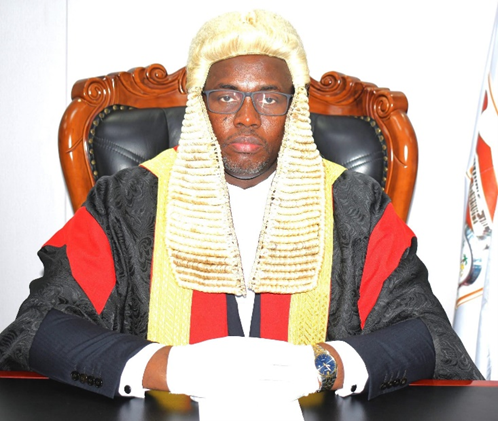
In a remarkable show of progress for democratic transparency, Sierra Leone’s Sixth Parliament under the leadership of the Right Honourable Speaker, Segepoh Solomon Thomas, has been recognized among the top five most open and accountable parliaments in Africa. The country earned an impressive overall score of 72.40% in the latest Africa Open Parliament Index (Africa OPI)—a continental assessment that measures how transparent, participatory, and accountable parliaments are to their citizens.
The Africa Parliamentary Monitoring Organisations Network (APMON), which compiled and released the 2025 rankings, credited Sierra Leone’s Parliament for significant strides in legislative openness and public engagement. This marks one of the strongest performances for Sierra Leone in the region, placing it ahead of several influential legislatures, including those of Nigeria, Rwanda, and Uganda.
The Index evaluates parliaments across three fundamental pillars—transparency, civic participation, and public accountability—using 48 rigorous indicators designed to reflect how accessible and responsive a parliament is to its citizens. In this cycle, Sierra Leone’s Parliament scored 53.64% for transparency, 48.64% for civic participation, and 38.64% for public accountability, combining for its overall score of 72.40%.
The report places South Africa at the top of the continental ranking with 79.69%, followed by Ghana at 77.60%, Kenya with 73.96%, and Zambia at 73.44%, leaving Sierra Leone in a strong 5th position.
For Sierra Leone, this recognition is more than just a statistical achievement—it reflects a gradual cultural shift in parliamentary operations. In recent years, the Sixth Parliament has undertaken several reforms to enhance openness, including livestreaming of sessions, digitization of legislative records, and expanded access to parliamentary proceedings for the media and civil society. Speaker Segepoh Solomon Thomas, widely praised for his inclusive and reform-minded leadership, has often emphasized that parliamentary legitimacy is rooted in transparency and accountability.
“Our Parliament must not be seen as an ivory tower but as a house of the people,” the Speaker remarked in a recent address. “Openness builds trust, and trust strengthens democracy.”
The Africa Parliamentary Monitoring Organisations Network (APMON)—a coalition of civil society groups that tracks the performance of national, sub-national, and regional parliaments—developed the Africa Open Parliament Index to encourage data-driven governance and comparative learning. The Index serves as both a mirror and a motivator: it helps identify areas where parliaments are thriving and where improvement is needed.
According to APMON, the Open Parliament Index is designed not merely for ranking purposes but to stimulate institutional reforms and civic engagement. It encourages parliaments to adopt practices that foster transparency—such as publishing committee reports, enabling citizens’ feedback on bills, and disclosing budgetary information. It also provides civil society and the media with an independent benchmark to hold leaders accountable and to push for continuous improvement in governance.
For Sierra Leone, the Index offers both validation and challenge. While the high ranking acknowledges progress, the relatively lower score in public accountability (38.64%) highlights the need for stronger oversight mechanisms, better communication of legislative outcomes, and more citizen access to information on how representatives perform their duties.
Civil society actors have welcomed the results but urged the Parliament not to become complacent. “This is a great achievement, but it must serve as a platform for further reform,” said a governance analyst with the Campaign for Good Governance (CGG). “Transparency should not end at publishing information—it must translate into meaningful engagement where citizens can influence legislative outcomes.”
APMON expressed optimism that the 2025 report will inspire constructive partnerships between parliaments, citizens, and civil society organizations across Africa. The network also noted that Sierra Leone’s rapid improvement in transparency and participation signals a broader democratic maturity that could serve as a model for other emerging democracies on the continent.
As the Index is published biennially, Sierra Leone’s next challenge lies in sustaining and deepening its reform momentum. With Parliament ranked among Africa’s top five, expectations are high that it will continue advancing the values of openness, dialogue, and accountability—hallmarks of a responsive democracy built to serve its people.