



By Mackie M. Jalloh
In a decisive move to confront the growing challenge of synthetic drug abuse in Sierra Leone, President Julius Maada Bio has reaffirmed his government’s commitment to support victims while tackling the root causes of the crisis. The announcement followed his visit to the recently reopened Government Rehabilitation Facility at Hastings, where he witnessed firsthand the devastating impact of kush, a potent synthetic drug that has increasingly plagued communities across the country.
The Hastings rehabilitation center, which had been closed temporarily due to funding constraints, now serves as a critical lifeline for approximately 100 patients currently receiving treatment for substance abuse. During his tour of the facility, President Bio expressed deep concern over the physical, mental, and social consequences of kush addiction, emphasizing that the epidemic affects not just individual users but entire families and communities.
“Today, I have seen the human cost of kush — the pain, the destruction, and the lives lost to this dangerous drug,” President Bio remarked. “This is not merely a health issue; it is a social crisis that demands urgent action from all sectors of government and society.”
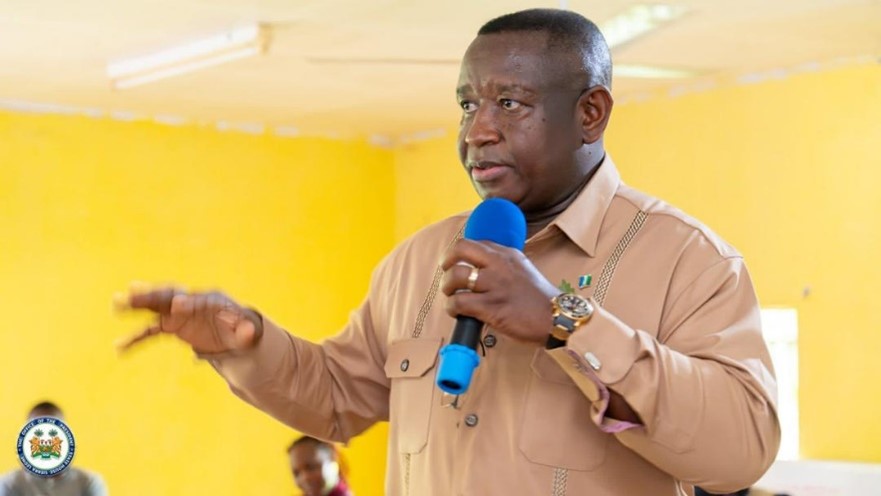
In his address at the facility, the President outlined a dual approach to addressing the epidemic: supporting victims through rehabilitation and treatment, and bringing drug traffickers and suppliers to justice. He vowed to use the full weight of government authority to disrupt networks that profit from the illegal trade and distribution of synthetic drugs.
“Those who exploit our citizens and endanger our youth through the sale and distribution of kush will face the law,” he said. “We will not tolerate activities that jeopardize the future of Sierra Leoneans, particularly our young people who represent the nation’s greatest hope.”
To reinforce these efforts, President Bio called on the Sierra Leone Police (SLP) and the National Drug Law Enforcement Agency (NDLEA) to intensify investigations and crackdowns on drug traffickers. He also indicated that the military could provide operational support, if necessary, in non-combative roles, ensuring the law enforcement agencies are well-equipped to dismantle trafficking networks.
Beyond law enforcement, President Bio highlighted the government’s long-term strategy to prevent addiction through public education campaigns, community outreach, and early intervention programs. “It is crucial that we address not just the supply of kush but also the demand,” he explained. “Awareness, education, and rehabilitation are central to reducing the number of new victims and ensuring those affected can return to productive lives.”
The Hastings rehabilitation facility stands as a symbol of the government’s renewed commitment to addressing substance abuse. Staffed by trained counselors, medical personnel, and support workers, the center provides comprehensive care, including detoxification, psychological counseling, and reintegration programs for recovering addicts.
President Bio concluded his visit by urging citizens, families, and community leaders to play an active role in curbing the spread of synthetic drugs. “This fight is not for government alone,” he stressed. “It requires vigilance, cooperation, and a shared commitment to protecting our youth and securing the future of our nation.”
The President’s visit to Hastings sends a strong message: the kush epidemic is a national priority, and Sierra Leone’s leadership is prepared to combine compassionate care for victims with decisive action against traffickers. With renewed funding, law enforcement support, and public engagement, the government aims to curb the crisis and restore hope to affected communities across the country.