



By: Mahamood Fofana
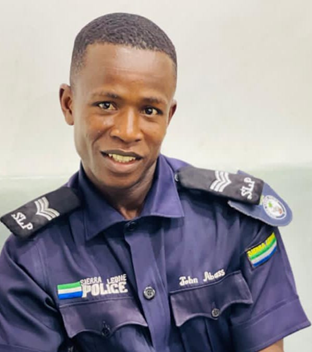
The Sierra Leone Police in the country’s northeast region have renewed their call for stronger community collaboration in tackling the growing threat of Kush, a deadly synthetic drug that continues to ravage the nation’s youth. Speaking to The Provincial Times Newspaper, Sergeant John Abass Kamara, Head of Media for the Sierra Leone Police (SLP) Northeast, appealed to citizens to demonstrate resilience and unity in the national effort to eradicate the drug from communities.
According to Sgt. Kamara, the fight against Kush cannot be left solely in the hands of law enforcement officers. He emphasized that the police force is vastly outnumbered by the citizenry and therefore relies heavily on community partnership to achieve meaningful results.
“The number of citizens outweighs the police,” Sgt. Kamara stated. “That is why collaboration with the communities is key in the fight against Kush. The police alone cannot win this battle without the involvement and cooperation of the people.”
He clarified the legal limits of the police’s role in the justice process, noting that their duty ends with arrest, investigation, and referral to the courts. According to him, the public often misunderstands this process, unfairly blaming the police when suspects are released or cases do not progress as expected.
“Our work as police officers is limited to arresting, investigating, and referring matters to court,” he explained. “What happens in court is beyond our control. But because people fail to understand this, they sometimes criticize the police unfairly.”
Drawing parallels with the country’s fight against Ebola, Sgt. Kamara recalled how collective community effort played a crucial role in containing the epidemic. He urged citizens to adopt a similar approach in confronting the Kush crisis, reminding them that many of the dealers and users are based within their very neighborhoods.
While the police stress collaboration, others have criticized the government’s response as weak and politically motivated. Shebora Samba Kamara, a lecturer at the University of Makeni, accused authorities of lacking the political will to confront the crisis head-on. He described as “unfortunate and disappointing” the recent comments by Chief Minister Dr. David Moinina Sengeh, who claimed that members of the opposition All People’s Congress (APC) were exaggerating Kush-related deaths to discredit the government.
Shebora Kamara argued that such statements only politicize a public health emergency and distract from the real issue—the lives being destroyed by the drug. He added that the government’s slow and inconsistent approach has emboldened traffickers and left rehabilitation centers without the resources needed to operate effectively.
“The government has given only lip service to the Kush menace,” he lamented. “Even the few rehabilitation centers that were established have been closed due to lack of funding. This proves the unseriousness of the government’s response.”
He further explained that while Kush originally entered the country through imported synthetic variants, local manufacturers have now begun producing a more potent and destructive version using toxic ingredients. This, he said, has made the drug deadlier and harder to control.
Public frustration also grew recently after the Ministry of Local Government issued a press statement challenging the Mayor of Freetown, Yvonne Aki-Sawyerr, to provide evidence of Kush-related deaths in the city. Although the mayor later presented her data, government critics argued that the focus should be on combating the drug rather than questioning its impact.
For their part, the police in the northeast have distanced themselves from confirming the exact number of Kush-related deaths, noting that such determinations fall within the jurisdiction of medical authorities. Sgt. Kamara emphasized that their main responsibility lies in intelligence gathering, enforcement, and collaboration with communities.
“We are not medical experts and cannot confirm the causes of death,” he said. “But I challenge every citizen to share any intelligence related to Kush. I assure you of confidentiality and safety. This is a fight we must face together, as one people.”
As Sierra Leone grapples with the growing Kush epidemic, voices like Sgt. Kamara’s underscore the urgent need for nationwide cooperation, depoliticized leadership, and sustained community engagement. Without these, experts warn, the country risks losing an entire generation to addiction and despair.