



By Mahamood Fofana
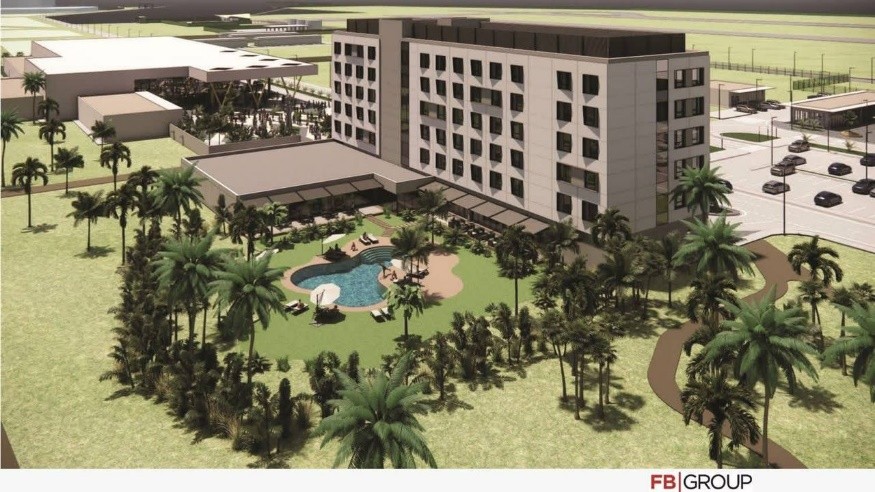
Public debate in Sierra Leone has intensified following the announcement by Finance Minister Sheku Ahmed Fantamadi Bangura of a proposed $124 million international conference centre to be constructed in Lungi under the administration of President Julius Maada Bio.
While critics have raised concerns about the scale and cost of the investment, government officials insist the project forms part of a broader national development strategy aimed at decentralising economic activity from Freetown and repositioning Lungi as a strategic economic hub.
For decades, Freetown has served as the administrative, commercial and diplomatic centre of the country. However, the heavy concentration of activity in the capital has exerted sustained pressure on infrastructure, housing, transportation and public services. Policymakers argue that long-term, sustainable growth requires a deliberate redistribution of economic opportunity across regions.
The proposed conference centre signals what officials describe as an intentional pivot. Rather than remaining solely the site of the nation’s main international gateway, Lungi is being reimagined as an economic extension zone capable of hosting regional and global engagements.
Authorities maintain that the initiative goes beyond a construction project. The facility is envisioned as a catalyst for conference tourism, business travel, hospitality expansion and small enterprise growth. By attracting high-level summits, trade forums and diplomatic gatherings, the centre could stimulate demand for hotels, event management services and other supporting industries, thereby creating jobs and expanding the local tax base.
The strategy aligns with ambitions to host major regional and continental meetings, including engagements under the Economic Community of West African States and the African Union, potentially elevating Sierra Leone’s diplomatic profile.
Central to the proposal is the “airport city” development model, in which aviation infrastructure anchors commercial, conference and mixed-use urban growth. Given its proximity to Lungi International Airport, the centre could serve as a nucleus for business parks, hospitality facilities, residential estates and retail development.
Nonetheless, fiscal prudence remains at the core of public discourse. Critics question whether allocating $124 million is justifiable amid ongoing demands in healthcare, education and nationwide infrastructure. The debate reflects the broader policy tension facing developing economies — balancing immediate social priorities with long-term capital investment.
Government officials, however, argue that transformative infrastructure requires significant upfront investment and that decentralisation is critical to reducing regional disparities. They contend that strategic economic diversification cannot be achieved without bold structural interventions. If executed transparently and integrated into a comprehensive development framework, the Lungi conference centre could represent a significant shift in Sierra Leone’s spatial economic planning. Its ultimate impact, however, will depend on effective implementation, private sector participation and sustained policy coordination