



By Alhaji M. Jalloh
A major step toward reviving Islamic and Arabic education in rural Sierra Leone has been initiated with the official launch of a Quranic Recitation Competition across all 13 sections of Sanda Tandaren Chiefdom in Karene District.
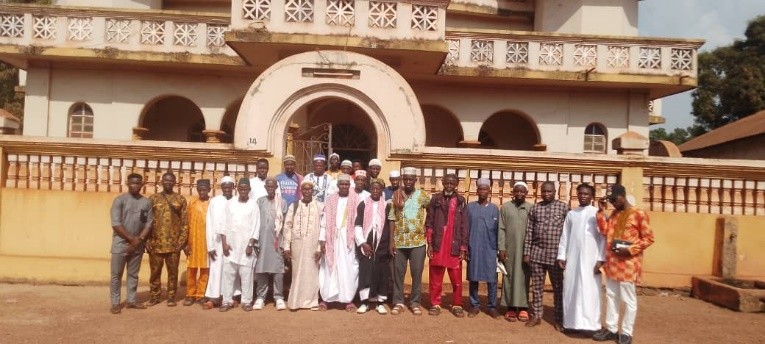
The initiative, spearheaded by the Hassan Alpha Timbo Foundation, was formally unveiled on Friday, March 20, 2026, at the Rokulan Town Mosque shortly after Juma prayers. The event drew a significant gathering of stakeholders, including Islamic scholars, community leaders, journalists, and residents from across the chiefdom, underscoring the importance attached to the program.
The mosque was filled to capacity as dignitaries and community members assembled to witness what many described as a historic intervention aimed at restoring the declining culture of Quranic learning among young people. The competition is designed not only as a religious activity but also as a strategic educational effort to reintroduce structured Arabic instruction in communities where such traditions have significantly weakened over time.
To ensure a strong foundation for the program, the Foundation provided an initial financial boost of NLe 10,000 to support religious leaders who will oversee implementation at the grassroots level. These funds are expected to facilitate teaching activities, coordination, and preparation ahead of the main competition scheduled for next year during the holy month of Ramadan.
Under the initiative, Imams across the chiefdom will take responsibility for training children and youths in Quranic recitation and basic Arabic literacy. Participants will compete for various awards, including prizes for winners, runners up, and recognition for all participants, creating an incentive-driven environment to encourage widespread involvement.
Speaking at the launch, the Foundation’s Director, Mohamed Munu, expressed appreciation for the overwhelming turnout and reaffirmed the organization’s commitment to the program’s success. He emphasized that the Foundation, established by a native of the chiefdom, is focused on charity, advocacy for vulnerable groups, and community development.
“Our mission is to reignite the passion for Arabic education as it once existed,” he stated. “Today, we see a worrying decline in interest among children and youths. This initiative is a call to action for parents, Imams, and community leaders to work together in rebuilding that foundation.”
Religious leaders present at the ceremony highlighted the urgency of the intervention. Estimates shared during the event suggest that while approximately 85 percent of the chiefdom’s population is Muslim, participation of young people in religious education and mosque activities has significantly dropped in recent years.
The Chief Imam of Sanda Tandaren Chiefdom, Mohamed Amin Jalloh, described the initiative as timely and necessary. He noted that the chiefdom has historically been known for its strong Islamic heritage, but that legacy is now at risk due to declining interest in Arabic studies.
He further outlined key challenges facing the program, including the need for sustained financial support, teaching materials, blackboards, solar lighting, and proper learning spaces to minimize distractions. He called for unity and collective responsibility among all sections of the chiefdom to ensure the initiative’s success.
In an interview, the Foundation’s Founder and CEO, Hassan Alpha Timbo, explained that the project was inspired by his observation of the gradual erosion of Arabic education in the region. He pledged continued support, including the provision of Quranic materials, Islamic attire, and other essential resources, alongside regular monitoring of progress.
The launch has already begun to attract interest from individuals and groups willing to support the initiative, with discussions underway to potentially expand the competition beyond the chiefdom to a national level.
Community members expressed optimism that the program will instill discipline, moral values, and a renewed sense of purpose among young people. Beyond the competition itself, stakeholders believe the initiative could restore a vital aspect of cultural and religious identity while contributing to broader community development. As preparations begin across all 13 sections, the success of the initiative will depend on sustained collaboration, resource mobilization, and the collective will to preserve and promote Islamic education for future generations.