



By Mackie M. Jalloh
Chief Operations Officer of Freetown Terminal Limited, Abubakarr Sesay, has reflected on the remarkable transformation of the terminal over the past fifteen years, describing its journey as a powerful story of sacrifice, resilience, and the determination of a small group of pioneers who laid the foundation for what has become one of Sierra Leone’s most important maritime facilities.
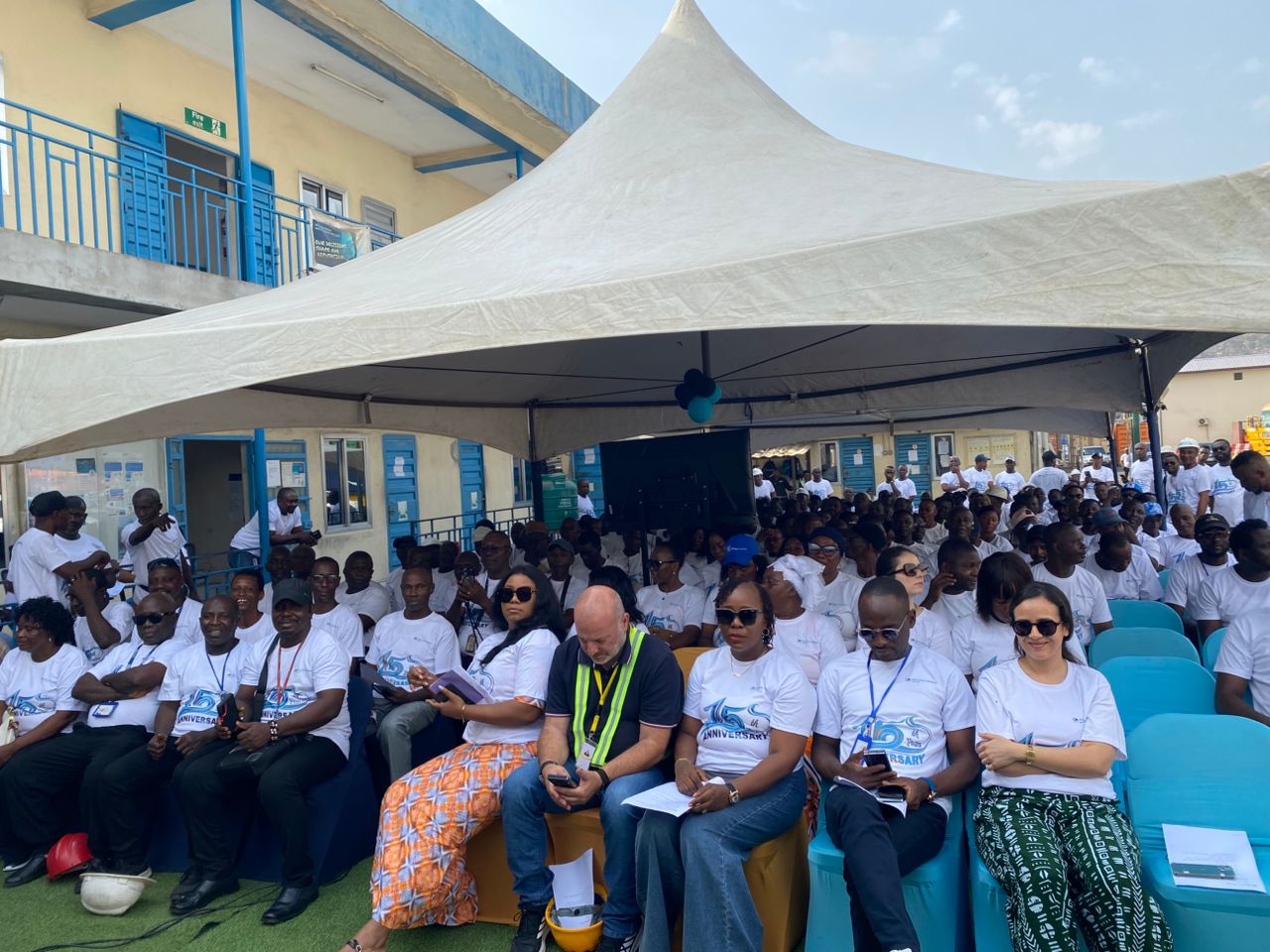
Speaking as the company celebrated its 15th anniversary on 13 March 2026, Sesay recounted how the journey began in March 2011, when a delegation from Bolloré Africa Logistics arrived at the offices of the Sierra Leone Ports Authority to meet him in his capacity as Container Manager at the time.
According to Sesay, the delegation included the late General Manager Marc Gérard, Chief Operations Officer Jean Ladeuix, Country Chief Financial Officer Stephane Bruennei, Workshop Manager Alan Michel, and Documentation Manager Edu. Their message, he said, was simple but historic: following the concession agreement between the Government of Sierra Leone and Freetown Terminal Limited, they wanted to begin building a new container terminal operation together with the existing SLPA staff.
Because the concession agreement required priority consideration for staff already working in the container terminal, Sesay became the first person approached. Soon after, he was joined by colleagues Darell Coker and Eustace Carroll Garrick, forming the small core team tasked with establishing the new terminal operations.
Sesay explained that the responsibility before them was enormous, but the team relied on their experience and commitment to create the operational structure from the ground up. While he organized and structured ship and yard teams, Coker coordinated labourers and equipment operators, while Garrick supervised the RoRo operations.
The first day of operations on 1 March 2011, Sesay recalled, was far from comfortable. There were no offices, no computers, and not even basic stationery.
“All we had was our knowledge, our personal laptops, and sometimes our own money to buy paper, pens, and ink,” he noted.
Despite those limitations, the team successfully handled its first vessel, the RoRo ship Grande Buenos Aires, which discharged 74 containers and 239 vehicles. The second vessel, Cecilie Maersk, discharged 221 containers and handled export cargo, achieving productivity of 5.58 moves per crane hour using ship cranes with manual spreaders.
For several months after operations began, the transition from SLPA to the new terminal was still incomplete. Most staff had accepted new contracts but continued working from SLPA offices while the new structure was being finalized. During that period, payroll arrangements were improvised, with Coker performing multiple roles including roster management, payroll coordination, and liaison with the stevedoring labour company Leone Dock.
A turning point came in July 2012 when the terminal received two Mobile Harbour Cranes, significantly improving operational efficiency and vessel turnaround time. Over the years that followed, the terminal continued modernizing with the introduction of reach stackers, empty handlers, terminal tractors, forklifts, expanded yard infrastructure, computerized management systems, and enhanced safety protocols.
Sesay also highlighted the development of local expertise as one of the terminal’s greatest achievements. Through continuous training and experience, many Sierra Leonean employees progressed to become crane operators, equipment drivers, safety officers, supervisors, and managers.
According to him, the company even made history by producing the first local Chief Operations Officer within the AGL network, a milestone that has since inspired similar initiatives across other terminals in the group.
Today, Freetown Terminal operates modern ship-to-shore cranes, RTGs, reach stackers, empty handlers, and terminal tractors, enabling it to handle thousands of containers efficiently each month.
Reflecting on the journey, Sesay said the terminal’s growth represents far more than infrastructure development.
“From using personal laptops and buying our own stationery to operating world-class equipment, the transformation of Freetown Terminal has been extraordinary,” he said.
He concluded that for those who were present from the beginning, the experience has been a journey defined by sacrifice, growth, and pride one that continues to shape the future of maritime trade in Sierra Leone.