



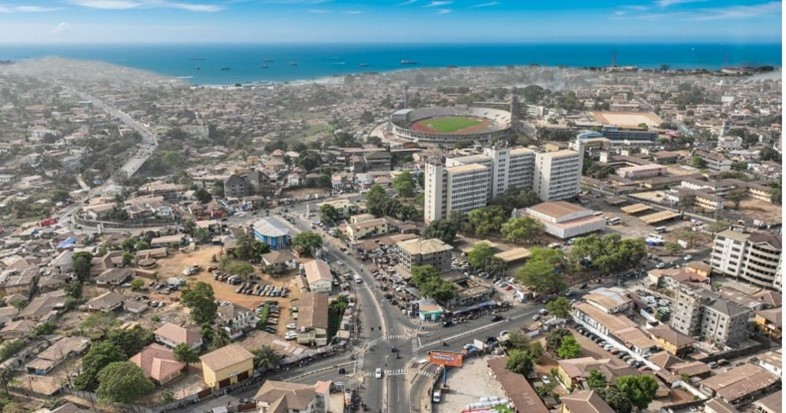
Freetown Residents Reject City Split, Demand Better Services
By Mackie M. Jalloh
A recent survey has revealed widespread opposition among Freetown residents to the government’s proposal to divide the capital into multiple local councils, while highlighting an urgent call for improved electricity supply and better management of cultural practices such as funeral processions. The findings, compiled by the Institute for Governance Reform (IGR), shed light on a growing disconnect between policy proposals and public expectations in Sierra Leone’s largest city.
The IGR poll, conducted between 9 and 12 October 2025, interviewed 1,072 adults across diverse neighborhoods of Freetown to gauge awareness of the proposed administrative restructuring and assess residents’ priorities regarding city governance and urban services. Alarmingly, only about one-third (32 percent) of respondents were aware of the government’s plan to split the Freetown City Council (FCC) into smaller administrative units. Among those aware, 62 percent either disagreed or strongly disagreed with the plan, signaling significant resistance to the restructuring.
When asked about their preferred governance model, a majority of 57 percent supported keeping the FCC intact, while 30 percent favoured smaller councils under FCC supervision. A minority, 13 percent, backed full decentralization. This indicates that while there is some openness to reform, most residents prioritise continuity and stability over administrative fragmentation.
The survey also highlighted pressing infrastructure concerns. Electricity supply, a longstanding challenge in Freetown, was identified as the top priority by respondents. While 76 percent acknowledged improvements in power availability compared to the previous year, particularly in the western parts of the city, concerns about affordability and quality remain pervasive. About 90 percent of respondents cited high tariffs as the main issue, 67 percent noted low or unstable voltage, 36 percent mentioned widespread power theft, and 34 percent reported corruption among utility staff as a major obstacle to reliable service.
Cultural practices such as funeral processions also emerged as a contentious issue. Long-standing traditions involving elaborate processions through city streets have increasingly clashed with urban management needs. The poll revealed that a slight majority (54 percent) want traditional grand send-offs to continue without interference, while 33 percent favoured restrictions on routes or timing to reduce traffic congestion. Smaller groups suggested vehicle-only processions (5 percent) or a complete ban (8 percent). This underscores the delicate balance authorities must strike between respecting cultural customs and ensuring urban order.
Prof. Fredline M’Cormack-Hale, Research Director at IGR, emphasised that the survey represents the first structured feedback from Freetown residents on these intertwined issues. Presenting the findings at the institute’s Spur Road office, she noted that the results reveal a critical gap between government proposals and public awareness. “Residents are most concerned about tangible service delivery—electricity, traffic management, and local safety—rather than abstract administrative restructuring,” she stated.
The survey points to clear policy recommendations for decision-makers:
1. Launch comprehensive public engagement campaigns to raise awareness and foster understanding before pursuing administrative changes.
2. Prioritise electricity sector reforms that address affordability, voltage stability, theft, and corruption to consolidate perceived improvements.
3. Implement culturally sensitive urban planning measures to manage funeral processions while preserving tradition.
The IGR findings highlight that any successful reform in Freetown must marry administrative efficiency with service delivery and public trust. Residents’ strong preference for maintaining an undivided FCC reflects the importance of continuity and direct communication in urban governance. Meanwhile, their concerns about electricity and urban management signal that service delivery, rather than bureaucratic restructuring, remains the foremost challenge for local authorities.
As the government considers its next steps, the message from Freetown is clear: reforms will only gain traction if they address real-world problems, engage citizens meaningfully, and respect the city’s social and cultural fabric. In a rapidly growing urban landscape, aligning policy with public expectation is critical for sustainable governance.