



By Mahamood Fofana
Since the ascent of President Julius Maada Bio to the leadership of the Sierra Leone People’s Party (SLPP) and his election as President in 2018, questions have emerged regarding the evolving role of the party’s National Women’s Council (NWC).
The NWC was established as a constitutional structure within the party to mobilise women, build leadership capacity, advance advocacy on gender and children’s affairs, and contribute meaningfully to both party governance and national development. Historically, it has served as a key institutional pillar for women’s political participation within the SLPP.
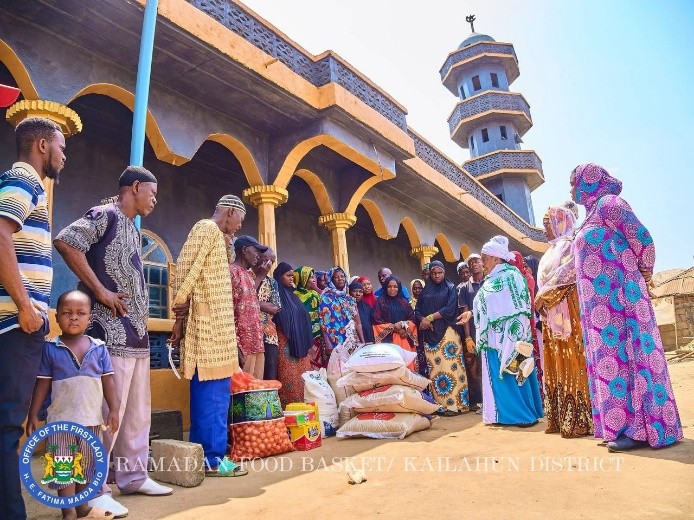
However, the emergence and growing prominence of the “JMB Women’s Wing,” widely associated with First Lady Fatima Maada Bio, has shifted public attention. Activities, advocacy campaigns and mobilisation initiatives that were traditionally undertaken under the banner of the NWC are increasingly perceived to be branded and driven through the JMB Wing.
This development has sparked internal and external debate. Some party supporters interpret the dynamic as strategic collaboration and renewed energy within the women’s movement of the party. Others question whether the NWC, as a constitutional organ, has been inadvertently overshadowed by a parallel structure built around personality-driven mobilisation.
The issue raises broader concerns about institutional autonomy and inclusiveness. Political parties rely on strong, clearly defined structures to sustain internal democracy and collective leadership. When an established body appears less visible while another gains prominence, questions naturally arise about balance, coordination and adherence to constitutional frameworks.
At the centre of the discussion is whether the NWC is operating in synergy with the JMB Wing or whether its independent voice has been diluted. Observers argue that clarity on roles, mandates and collaboration mechanisms would strengthen cohesion and reinforce the party’s commitment to women’s empowerment beyond symbolism.
For the SLPP, the debate ultimately speaks to the importance of institutional integrity. Whether viewed as consolidation of efforts or unintended sidelining, the future effectiveness of women’s political participation within the party will depend on transparent leadership, shared responsibility and respect for established structures.