



By Mahamood Fofana
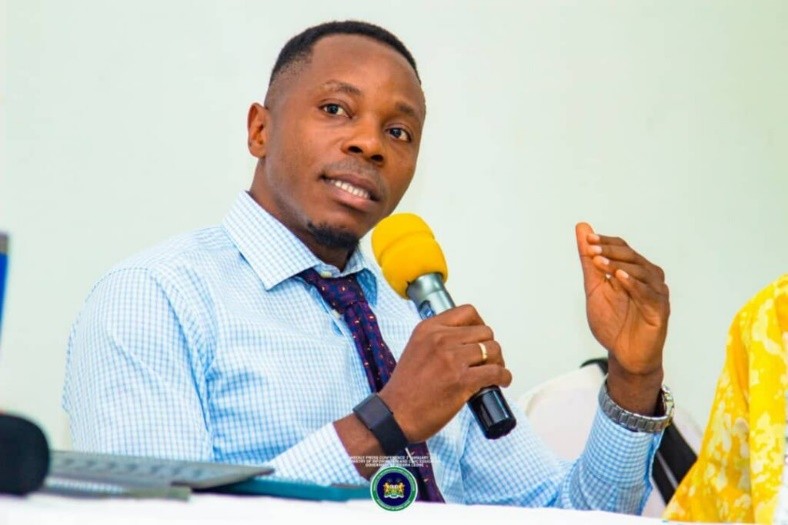
Public debate has intensified following recent social media comments by Sierra Leone’s Chief Minister, David Moinina Sengeh, which have triggered criticism from opposition politicians and sections of the general public.
At the centre of the controversy is a Facebook post in which the Chief Minister described members of the parliamentary leadership of the All People’s Congress (APC) as “an absolute disgrace.” The statement has since circulated widely online, prompting discussions about political decorum, leadership tone, and the responsibilities attached to high public office.
Observers note that the Office of the Chief Minister occupies a strategic position within government, often serving as a bridge between the executive and other arms of the state, as well as between political actors during sensitive national engagements. As a result, critics argue that public communication from such an office should reflect restraint, diplomacy, and statesmanship, particularly in a politically polarized environment.
The reaction from the opposition was swift. Honourable Abdul Karim Kamara, the APC Chief Whip in Parliament, publicly declared that APC Members of Parliament would not participate in any national dialogue involving the Chief Minister under the current circumstances. He characterized the Minister’s comments as “disrespectful and immature,” suggesting that the remarks undermine prospects for bipartisan cooperation.
The dispute carries broader implications beyond the immediate exchange. The Chief Minister plays a significant role in the implementation of the Tripartite Committee recommendations, a framework intended to foster consensus and stability following contentious political developments. Any deterioration in working relationships between key political actors risks complicating efforts aimed at national reconciliation and institutional reform.
Political analysts argue that while robust debate is intrinsic to democratic governance, the manner in which disagreements are expressed can either strengthen or weaken public trust. In contexts where socio-economic challenges remain acute, citizens often expect leaders to prioritize collaboration over confrontation.
The episode has also reignited conversations about digital communication in governance. Social media platforms provide immediacy and direct engagement, but they also amplify statements rapidly and sometimes irreversibly. In highly polarized settings, tone and phrasing can significantly shape public perception and inter-party dynamics.
As Sierra Leone continues consolidating its democratic culture, many stakeholders emphasize the importance of constructive engagement, measured rhetoric, and mutual respect across party lines. Sustained national dialogue, they argue, depends not only on institutional frameworks but also on the political maturity and communication discipline of those entrusted with public leadership.