



By Mackie M. Jalloh
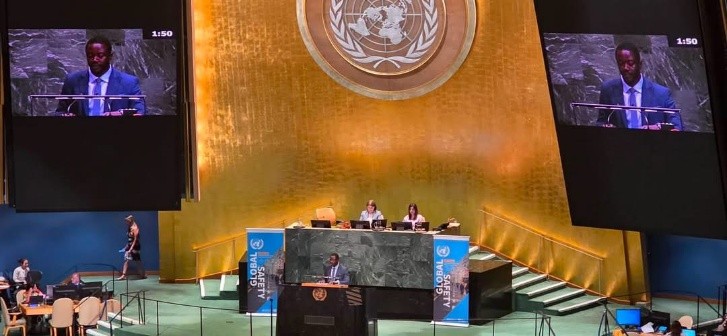
Sierra Leone has renewed its pledge to confront the growing global road safety crisis after the Executive Director of the Sierra Leone Road Safety Authority (SLRSA), James Bagie Bio, joined representatives of 162 United Nations Member States in endorsing a new international commitment aimed at saving lives on the world’s roads.
The high-level engagement in New York placed Sierra Leone among countries backing intensified global action to reduce road traffic fatalities and serious injuries by 50 percent by 2030. The commitment was formalised through the adoption of the “Political Declaration of the High-Level Meeting on Improving Global Road Safety,” which received overwhelming support at the United Nations General Assembly, with only one country voting against and no abstentions recorded.
For Sierra Leone, the declaration comes at a time when road safety remains a major national concern, with road crashes continuing to cause deaths, serious injuries, permanent disabilities and significant economic losses to families and communities.
Speaking during the high-level meeting, James Bio said Sierra Leone remains committed to translating national road safety policies, legislation and strategies into practical action capable of protecting motorists, passengers, pedestrians, cyclists and other vulnerable road users.
He stressed that improving road safety requires more than isolated interventions, arguing that safer roads must be supported by responsible road users, effective enforcement, improved vehicle standards, better infrastructure and stronger coordination among national institutions.
“Road safety is a shared responsibility,” Bio stated, reaffirming Sierra Leone’s determination to work towards the global target of halving road traffic deaths and serious injuries by 2030 and sustaining progress beyond that deadline.
He further highlighted Sierra Leone’s commitment to working with international partners to strengthen transport systems and improve the country’s road safety performance. According to him, global cooperation remains essential as countries confront the complex factors contributing to road crashes, including unsafe driving practices, inadequate infrastructure, weak compliance with traffic regulations and limited public awareness.
Bio also recognised the leadership of President Julius Maada Bio, saying the government has continued to place road safety among its priorities through policies and initiatives intended to reduce preventable crashes and improve safety across the country’s transport network.
The UN declaration calls on governments to intensify road safety education and public awareness while ensuring that safety considerations are integrated into the planning, construction and management of road infrastructure. It also emphasises accountability in the delivery of transport projects and calls for compliance with internationally recognised road safety standards.
The global commitment further recognises the role of health literacy and public education in preventing crashes and reducing the devastating consequences of road traffic injuries.
James Bio’s participation in the United Nations high-level meeting provides Sierra Leone with an opportunity to reaffirm its national road safety agenda on an international platform. It also signals the country’s intention to align its road safety efforts with global commitments under Sustainable Development Goal 3.6 and the Global Plan for the Decade of Action for Road Safety 2021–2030.
As Sierra Leone continues to expand its road network and urban transport systems, the SLRSA Executive Director’s intervention reinforces the need for road development to be matched by stronger safety measures, greater public responsibility and sustained institutional action.
The challenge now lies in turning the international commitment into measurable results on the ground, ensuring that the promise of safer roads translates into fewer crashes, fewer injuries and fewer families losing loved ones on Sierra Leone’s roads.