



By Mahamood Fofana
The Anti-Corruption Commission (ACC) has intensified efforts to strengthen grassroots accountability by opening a new phase of its nationwide engagement with traditional authorities in Moyamba District, where chiefs and community leaders were encouraged to play a more active role in promoting transparency and ethical leadership.
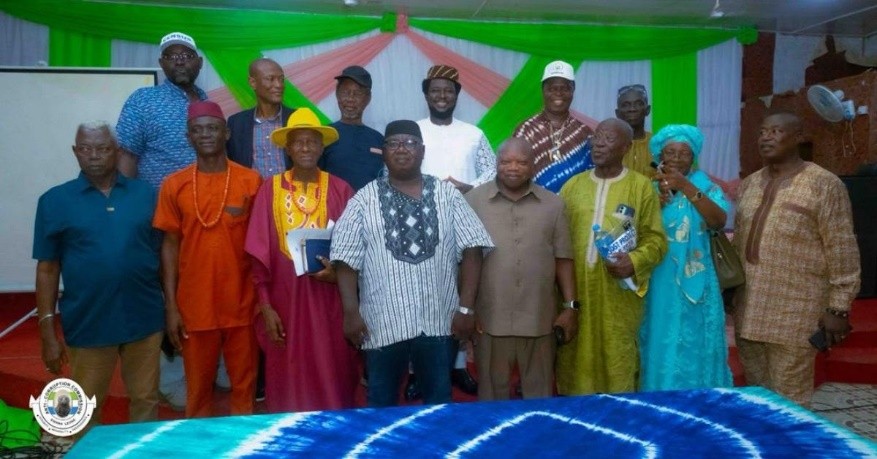
The outreach programme, held at the Jane Lahai Hall on June 2, 2026, marked the commencement of the Commission’s Southern Region consultations with traditional and local authorities. The initiative is designed to foster closer cooperation between the ACC and chiefdom leaders while enhancing understanding of anti-corruption laws and governance responsibilities.
Addressing Paramount Chiefs and other participants, ACC Deputy Commissioner Augustine Foday Ngobie underscored the strategic role traditional leaders occupy within their communities. He noted that the success of the national fight against corruption depends not only on state institutions but also on the involvement of influential local authorities who interact directly with citizens.
Ngobie explained that the Commission’s decision to engage traditional leaders stems from a recognition that community-based leadership structures remain essential in promoting integrity, accountability, and compliance with national laws. He stressed that raising awareness about the provisions of the Anti-Corruption Act would help prevent violations and encourage responsible leadership practices at the local level.
A significant portion of the engagement focused on clarifying legal provisions relating to assets declaration, gifts, and conflicts of interest. Participants were informed about their obligations under the law and the importance of maintaining transparency when carrying out public responsibilities.
Delivering the keynote presentation, ACC Commissioner Francis Ben Kaifala highlighted the importance of bridging the gap between customary traditions and statutory regulations. He noted that while traditional practices remain an important part of Sierra Leone’s cultural heritage, public officials and traditional authorities must also ensure that their actions comply with the law.
Kaifala explained that misconceptions often arise regarding the acceptance of gifts by public officials and traditional leaders. He emphasized that the law does not prohibit gifts given as gestures of appreciation or respect. However, he warned that concerns arise when gifts are capable of influencing official decisions or creating situations that compromise impartiality.
He further explained that gifts reaching a specified value threshold must be formally declared and documented, adding that transparency measures are intended to protect both the recipient and the integrity of public institutions.
The Commissioner also described assets declaration as an important accountability mechanism rather than a punitive measure. According to him, maintaining accurate records of assets can serve as a safeguard for honest officials by providing verifiable documentation of ownership and financial interests.
Speaking on behalf of Paramount Chiefs in Moyamba District, PC John Jibao Russell Nyama II of Lower Banta Chiefdom welcomed the initiative and praised the Commission for providing greater clarity on issues that often generate uncertainty among traditional leaders.
The event featured extensive discussions on corruption prevention, ethical governance, accountability, and conflict-of-interest management. Chiefs and stakeholders were given the opportunity to raise concerns, ask questions, and exchange views on practical measures for strengthening transparency within their chiefdoms and communities. The ACC has indicated that the Southern Region engagement will continue in Bonthe, Pujehun, and Bo districts as part of its broader campaign to deepen public awareness and build stronger partnerships in the national effort to combat corruption