



By Mackie M. Jalloh
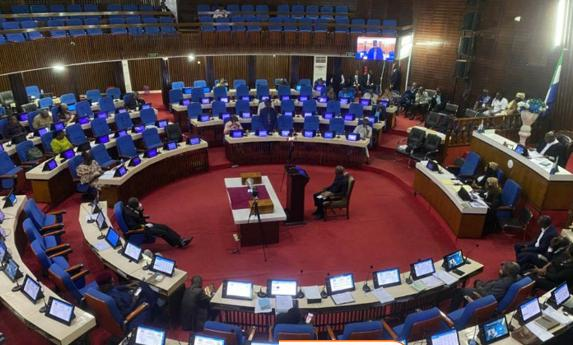
Sierra Leone’s political temperature shifted noticeably on Tuesday as lawmakers from the opposition All People’s Congress (APC) reappeared in Parliament, ending a prolonged boycott that had effectively muted dissenting voices within the legislative chamber. Their return, however, unfolded against an unusual backdrop an almost empty government bench, raising fresh questions about political timing and sincerity on both sides of the aisle.
For weeks, the absence of APC legislators had cast a shadow over parliamentary proceedings, with critics arguing that democracy itself was being undermined by the lack of opposition scrutiny. That impasse appears to have been broken, at least temporarily, following a series of behind the scenes negotiations led by Speaker Segepoh Solomon Thomas.
Addressing the chamber upon their return, the Speaker struck a firm but conciliatory tone, reminding the opposition that parliamentary engagement is not optional but a constitutional obligation. He emphasized that constituents across the country depend on their representatives to articulate grievances, challenge policy, and shape national discourse from within not from the sidelines.
The APC’s re-entry was not merely symbolic. Almost immediately, their MPs inserted themselves into ongoing debates, signaling an intent to reassert their role in legislative oversight. Their presence altered the rhythm of proceedings, injecting a level of scrutiny that had been largely absent during the boycott period.
Opposition Leader Abdul Kargbo acknowledged the Speaker’s role in mediating the standoff, revealing that multiple engagements had taken place to persuade the party to return. But his remarks also made it clear that the boycott’s underlying grievances have not disappeared.
Central among those demands is the formal presentation of the Agreement for National Unity before Parliament a document the APC believes should not remain a political abstraction but be subjected to legislative review and accountability mechanisms. Kargbo further called for the establishment of a dedicated oversight structure to monitor the country’s electoral management systems, a pointed indication that trust in electoral processes remains fragile.
Yet the optics of the day were difficult to ignore. While opposition MPs filled their seats, many lawmakers from the ruling Sierra Leone People’s Party (SLPP) were absent, reportedly attending official engagements abroad. The absence of key government figures including the Leader of Government Business left Parliament functioning, but far from balanced.
This asymmetry has sparked quiet criticism. Some observers argue that while the APC’s return is being framed as a victory for dialogue, it risks appearing performative if the government side is not equally present to engage in substantive debate. In effect, the chamber briefly flipped roles an active opposition facing a largely invisible government.
Speaker Thomas attempted to steady expectations, assuring the APC that their concerns would be addressed once the full leadership of the House reconvenes. Whether that assurance translates into concrete action remains uncertain.
What is clear, however, is that the boycott’s end does not signal the resolution of Sierra Leone’s political tensions. Instead, it marks a transition from protest by absence to confrontation within the system. The durability of this renewed engagement will depend less on symbolic returns and more on whether Parliament can now function as a genuine arena for accountability rather than a stage for political maneuvering.