



By Mackie M. Jalloh
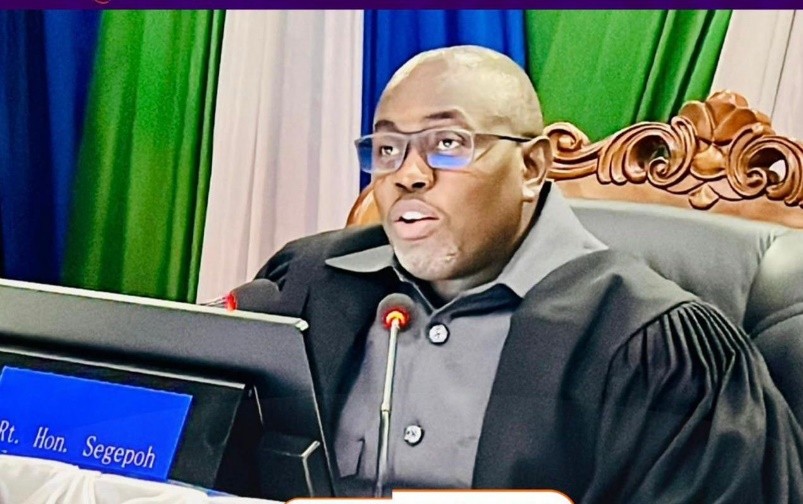
As Sierra Leone’s legislative agenda regains momentum after an extended parliamentary break, renewed attention is being placed on discipline, accountability, and political cooperation within the country’s lawmaking body. In a move widely interpreted as a strategic effort to stabilize parliamentary operations, the Speaker of Parliament, Segepoh Solomon Thomas, has summoned the leadership of the All People’s Congress (APC) to a closed door meeting scheduled for Wednesday at 1:00 PM in his chambers.
The engagement comes at a critical time when Parliament is preparing to transition from a prolonged recess into a period of more frequent and structured sittings. While the break had temporarily slowed legislative activities, it also created space for political parties particularly the APC to complete internal electoral processes at various levels. Additionally, the recess coincided with the observance of Eid al-Fitr, a factor the Speaker noted was taken into account to ensure inclusivity and fairness in parliamentary scheduling.
However, with lawmakers now expected to return to full legislative duties, the Speaker’s latest intervention signals a shift in tone from accommodation to enforcement of parliamentary standards. His decision to directly engage the APC leadership reflects underlying concerns about attendance patterns, internal cohesion, and the broader conduct of Members of Parliament (MPs) within the House.
At the core of his message is a firm reminder of constitutional obligations. Referencing Section 97(b) of the 1991 Constitution, Speaker Thomas emphasized that MPs are elected primarily to serve the interests of their constituents and the nation at large not to pursue personal gain or partisan advantage. He cautioned that any behavior that undermines this responsibility erodes public trust and weakens the integrity of Parliament as an institution.
Political observers view this development as part of a broader attempt to recalibrate the working relationship between the ruling structures of Parliament and opposition lawmakers. In recent times, tensions within the House have occasionally manifested in walkouts, absenteeism, and procedural standoffs tactics that, while politically significant, have also hindered legislative progress.
By calling for a direct meeting with APC leadership, the Speaker appears to be prioritizing dialogue over confrontation, seeking to address grievances and align expectations before parliamentary sittings intensify. Analysts suggest that such preemptive engagement could help prevent disruptions and foster a more cooperative legislative environment.
The Speaker also issued a pointed warning against the strategic use of absenteeism as a political tool. He argued that lawmakers have numerous legitimate avenues “more than one hundred and ten ways,” as he put it to hold the government accountable without resorting to actions that compromise parliamentary participation. Regular attendance, he stressed, is not optional but a fundamental requirement of public service.
Beyond the immediate political implications, the development carries broader significance for democratic governance in Sierra Leone. A functional and disciplined Parliament is essential for effective lawmaking, oversight, and representation. Any breakdown in these processes risks undermining public confidence in democratic institutions.
As the scheduled meeting approaches and sittings resume at a more consistent pace, attention will be focused on how both the Speaker and the APC leadership navigate this moment. Whether it leads to improved cooperation or further friction will shape the tone of parliamentary proceedings in the months ahead.
Ultimately, the Speaker’s message is clear: Parliament must rise above partisan divides and refocus on its primary mandate serving the people of Sierra Leone with integrity, commitment, and accountability.