



By Sahrfoa Matturie
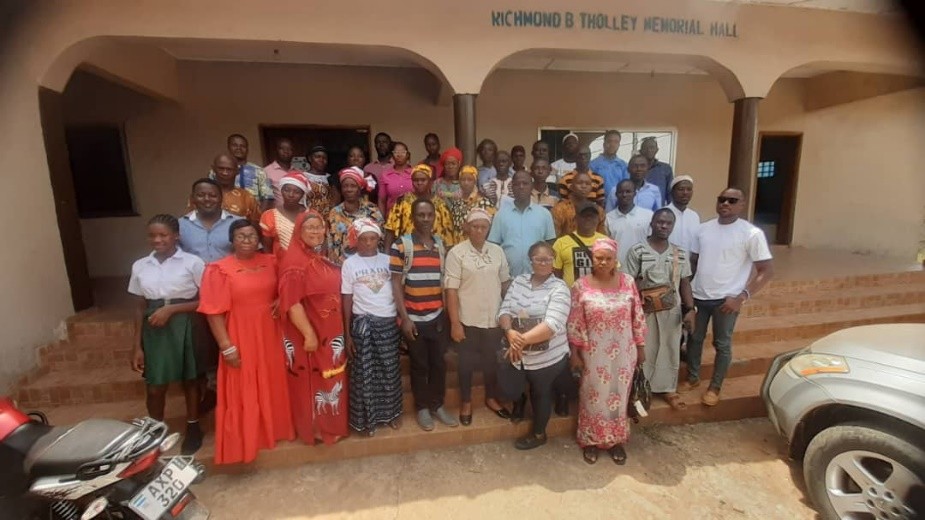
The Women’s Initiative for Self-Empowerment (WISE) recently hosted a one-day dialogue with key stakeholders to discuss strategies for reducing and ultimately eliminating Female Genital Mutilation (FGM) in Sierra Leone. The session brought together community leaders, women’s groups, and young people to foster understanding and promote protective measures for girls and women.
Speaking at the event, Haja Betty Alimamy emphasized that the campaign does not target the Bondo society itself, which she described as an important cultural institution, but specifically opposes the cutting practices associated with it. She stressed that both Christianity and Islam condemn harmful practices that injure women and girls and advised traditional leaders to ensure that initiation activities comply with national laws and human rights standards.
Animata Koroma explained that the organization employs a community-friendly approach to raise awareness about FGM. She highlighted that the dialogue was designed to encourage open discussion about why FGM persists despite increased public awareness of its dangers. Koroma also linked the event to International Women’s Day celebrations and reaffirmed Sierra Leone’s commitment to protecting women and girls, citing the country’s ratification of the Maputo Protocol, particularly Article 5, which calls for the elimination of harmful practices like FGM.
Student participants expressed appreciation for the initiative. Aminata Sesay, a Form Two student, said the dialogue helped her understand the risks associated with FGM and pledged to educate her peers about the issue.
A female initiator, Rematu Bangura, also voiced support for ending harmful cutting practices, emphasizing that any traditional initiation should follow legal clearance from the police to prevent violations of the law.
The dialogue concluded with calls for sustained engagement with communities, traditional leaders, women’s organizations, and youth to protect the rights, dignity, and wellbeing of women and girls throughout Sierra Leone. Participants agreed that continuous education, advocacy, and community collaboration are essential to achieving a society free from FGM.