



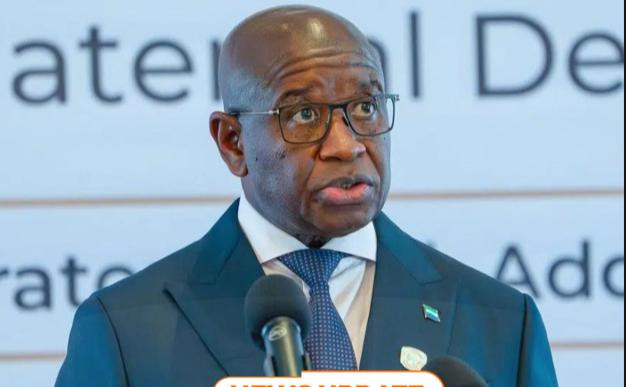
President Bio Declares Violence Against Women a Crime
By Marion (Rion) Bangura
Marking the global observance of International Women’s Day in 2026, Sierra Leone’s President, Julius Maada Bio, used the occasion to deliver a forceful message against violence and discrimination targeting women and girls. Addressing citizens and regional partners, the president stressed that acts of abuse often justified under the guise of culture or tradition must be confronted and eliminated.
Speaking in the context of the international theme “Rights. Justice. Action. For All Women and Girls,” the president urged governments, communities, and institutions to move beyond symbolic commitments and focus on concrete efforts that guarantee safety, dignity, and opportunity for women.
According to President Bio, gender-based violence continues to undermine social progress and threatens the wellbeing of families and communities. He noted that while cultural values are important to national identity, they must never be used as a shield to excuse practices that harm women.
The president emphasized that protecting women’s rights is not only a moral duty but also a legal responsibility of the state and society. “Violence against women cannot be defended as tradition,” he stated, arguing that any act that violates a woman’s dignity should be recognized as a crime and treated accordingly under the law.
During his remarks, the president reflected on the contributions of Sierra Leonean women across various sectors of national life. From market traders and farmers to educators, medical professionals, and judicial officers, he acknowledged that women remain central to the country’s social and economic development.
He also paid tribute to the resilience of women during the country’s civil conflict, observing that many women played vital roles in sustaining families and communities during one of the nation’s most difficult periods. Their courage and perseverance, he said, helped lay the groundwork for the recovery and stability Sierra Leone enjoys today.
President Bio used the occasion to highlight reforms introduced by his administration to promote gender equality, including the passage of the Gender Equality and Women’s Empowerment Act. The legislation mandates that women occupy at least thirty percent of positions in both elective and appointive public offices, a measure intended to strengthen female participation in governance and decision making.
He described the law as a significant step toward institutionalizing equality in Sierra Leone’s democratic system, arguing that representation of women in leadership roles helps shape policies that reflect the needs of the entire population.
The president also reiterated his government’s commitment to tackling challenges such as sexual and gender-based violence, child marriage, and barriers that prevent girls from completing their education. He noted that improving access to education remains one of the most effective ways to empower women and promote long-term national development.
In that regard, he referenced the government’s Free Quality Education Programme, which aims to remove financial barriers to schooling and has increased enrollment among girls across the country.
Beyond Sierra Leone, President Bio addressed the broader West African context in his capacity as Chair of the Economic Community of West African States (ECOWAS) Authority of Heads of State and Government. He stressed that regional stability and democratic progress cannot be achieved if women continue to face violence, exclusion, and injustice.
The president concluded by encouraging men and boys to actively support the cause of gender equality. He argued that building societies where women are safe and empowered ultimately strengthens families, promotes social harmony, and contributes to sustainable national and regional development.
As Sierra Leone joined the rest of the world in marking International Women’s Day, the message from the country’s leadership underscored a broader call for accountability, legal protection, and collective action to ensure that women and girls can live free from violence and discrimination.