



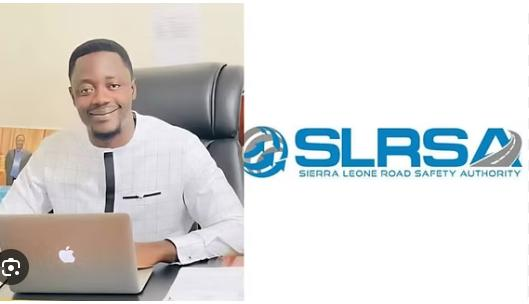
By Mackie M. Jalloh
One year ago, the leadership of the Sierra Leone Road Safety Authority (SLRSA) entered a new phase when James Bagie Bio assumed office as Executive Director. Twelve months later, the institution stands at a noticeably different point defined by renewed energy, administrative reforms, and a clear push toward modernizing road safety management in Sierra Leone.
Since taking the helm, Bio has focused on repositioning the Authority as a proactive and technologically responsive regulator rather than merely an administrative licensing body. Under his stewardship, several initiatives aimed at improving efficiency, transparency, and public service delivery have begun to reshape the institution’s operations.
One of the most notable shifts has been the drive toward decentralizing key services, particularly the processing of driver’s licenses and vehicle documentation. For years, citizens often faced long delays and congestion in the capital while trying to access essential services. By expanding service delivery points beyond Freetown, the Authority has begun easing those burdens and bringing road safety administration closer to communities across the country.
Bio’s leadership has also emphasized digital transformation and improved enforcement mechanisms. Through the introduction of new monitoring technologies and data driven verification systems, SLRSA has strengthened its ability to track vehicle compliance and reduce fraudulent documentation. These measures are gradually building public confidence in the Authority’s regulatory capacity.
Equally significant has been the renewed focus on road safety education and awareness. Throughout the past year, the Authority has intensified campaigns aimed at drivers, motorcyclists, transport unions, and pedestrians promoting responsible road use and highlighting the human cost of reckless driving. These initiatives reflect a growing recognition that effective road safety management requires both enforcement and sustained public engagement.
Within the institution itself, staff members describe a culture that increasingly values professionalism, accountability, and teamwork. Colleagues point to Bio’s leadership style as one that encourages collaboration and innovation while maintaining a firm commitment to institutional discipline.
Observers say these developments reflect a leadership approach rooted in strategic thinking and public service. Bio has consistently emphasized that road safety is not merely a regulatory obligation but a national responsibility tied directly to the protection of lives.
As he marks one year in office, the Executive Director has expressed gratitude to the Government of Sierra Leone, the Authority’s governing board, staff, and development partners who have supported the institution’s work. He has also reaffirmed his commitment to transparency and service, noting that the progress recorded so far represents only the foundation for deeper reforms. Looking ahead, expectations remain high as the Authority continues its efforts to strengthen enforcement, improve service delivery, and reduce road accidents nationwide. For many stakeholders, the first year of James Bagie Bio’s tenure signals the beginning of a longer journey toward safer roads and a more responsive road safety institution in Sierra Leone.