



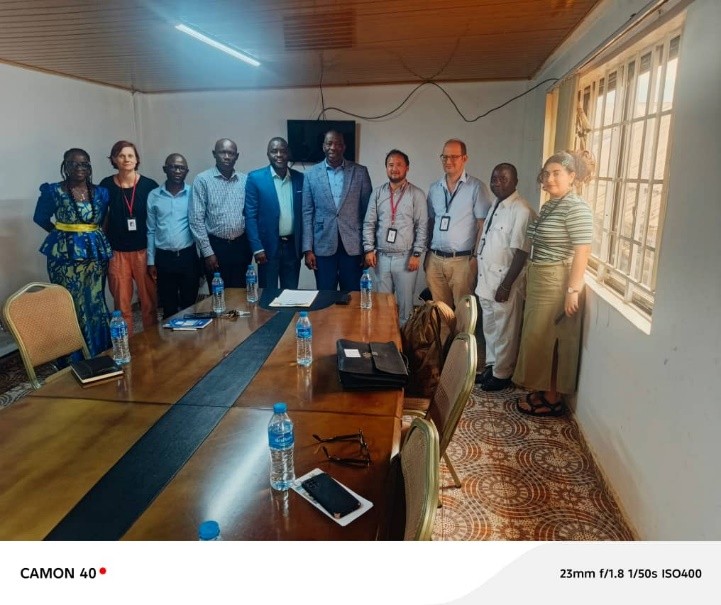
The Sierra Leone Seed Certification Agency (SLeSCA) has held a high-level collaborative meeting with the German development agency, GIZ, aimed at strengthening cooperation and advancing the transformation of Sierra Leone’s seed sector. The meeting took place on Tuesday, 28 January 2026, at Conference Room One of the SLeSCA headquarters and brought together senior officials from both institutions.
Opening the meeting, the Executive Director of SLeSCA, Dr. Robert Chakanda, provided a comprehensive overview of the Agency’s mandate, achievements, and operational challenges. He highlighted the strategic importance of SLeSCA within Sierra Leone’s agricultural and food systems, stressing that the Agency plays a central role in ensuring the availability of quality seeds for farmers, which is critical to national food security and agricultural productivity.
Dr. Chakanda acknowledged the longstanding contribution of GIZ to the development of the seed sector in Sierra Leone, noting that the partnership dates back to the late 1990s, shortly after the end of the civil war. He described GIZ as a key partner whose interventions have helped lay the foundation for reforms and improvements across the seed value chain.
He further emphasized that SLeSCA is a strategic actor in the Food Value Chain, particularly in regulating seed quality and certification standards. In clarifying institutional roles, Dr. Chakanda explained the complementary working relationship between SLeSCA and the Sierra Leone Agricultural Research Institute (SLARI), noting that while SLARI focuses on research and varietal development, SLeSCA is responsible for certification, quality assurance, and regulatory oversight.
During his presentation, the Executive Director outlined several priority areas where collaboration with GIZ could significantly enhance the Agency’s effectiveness. These areas include seed multiplication and certification, international training opportunities for staff, support to seed sector actors, improved mobility for field operations, and accelerated formalization of the national seed policy document. He also highlighted the need for technical support, digitalization of SLeSCA’s operations, strengthened quality assurance systems, and further equipping of the Agency’s seed testing laboratory.
Responding on behalf of GIZ, the Director of the organization explained that GIZ has recently shifted its strategic focus toward private sector development. He noted that this approach is aimed at promoting sustainability, job creation, and youth employment, particularly within the agricultural sector. He added that GIZ is currently working closely with several agricultural institutions and bodies in Sierra Leone that are actively creating employment opportunities for young people across the country.
Other participants at the meeting echoed similar views, underscoring the importance of public-private partnerships in driving agricultural transformation and ensuring that interventions have lasting impact.
At the conclusion of the discussions, both parties expressed optimism about future collaboration. The GIZ team indicated that there is strong potential for partnership with SLeSCA in key areas such as seed multiplication and certification, expansion and improvement of cassava varieties, provision of technical support, and enhanced mobility to support field-level operations.
The meeting ended on a positive note, with both institutions reaffirming their commitment to working together to strengthen the seed sector, improve agricultural productivity, and contribute to food security and economic growth in Sierra Leone.
The engagement reflects SLeSCA’s ongoing efforts to build strategic partnerships that support its mandate and position the Agency as a key driver of quality assurance and innovation within the national agricultural system.
From the Media and Communications Unit of SLeSCA.