



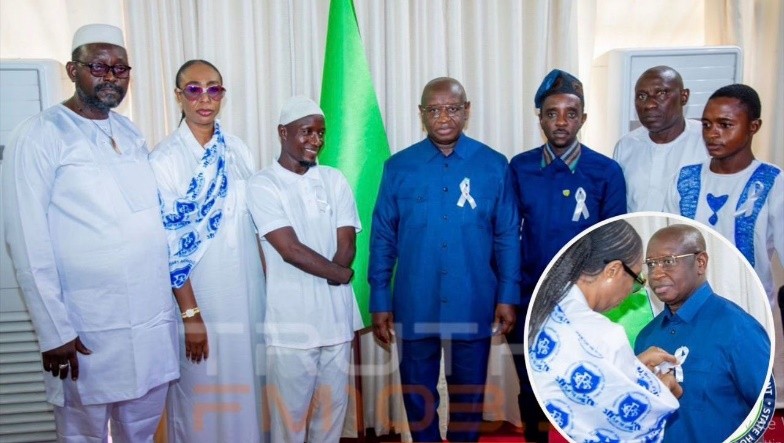
By Mahamood Fofana
Sierra Leone’s declaration of January 18 as a “National Remembrance Day” by President Julius Maada Bio has been welcomed as a step toward acknowledging the country’s painful civil war past. However, human rights advocates, war victims, and peace-building experts caution that the proclamation does not fully implement the recommendations of the Sierra Leone Truth and Reconciliation Commission (TRC).
The eleven-year civil war, which lasted from 1991 to 2002, claimed an estimated 50,000 to 70,000 lives and displaced approximately 2.5 million people, leaving deep scars across the nation. In 2004, two years after the official end of hostilities, the TRC issued a report outlining the causes of the conflict and providing a series of recommendations designed to promote reconciliation, prevent future wars, and address the suffering of victims.
Among its recommendations, Volume 2, Chapter 3, Section 522, page 199, specifically called for the government to promote reconciliation activities, including the declaration of a public holiday on January 18. The TRC emphasized that such initiatives should not only serve as symbolic remembrance but also actively involve victims, allowing them to share their experiences and participate in healing processes.
In December 2025, President Bio officially proclaimed January 18 as “National Remembrance Day,” to be observed annually starting in 2026. While the announcement was lauded by many as a positive move, critics argue that it risks being merely symbolic if not coupled with concrete measures to address the ongoing neglect of war survivors.
Peter Conteh, Chairman of the Bombali District Human Rights Committee, welcomed the declaration but highlighted the need for meaningful engagement with victims. “This will be any other useless commemoration if those recognized are neglected by the same government,” he warned, stressing that reconciliation requires more than ceremonial observance.
Mohamed Osman Bangura, chairman of the Oslo Amputee Camp in Bombali District, echoed the call for inclusivity, insisting that war victims should “own this day.” He explained that allowing victims to share their stories publicly is essential for preventing the recurrence of conflict. “I am happy about the declaration, but my advocacy is that the victims must lead this day so we can tell our stories and discourage any intent of war again,” Bangura said.
In Makeni, resident Ibrahim Sorie encouraged collective participation in commemorating the day. “Everyone should join the government to make this day memorable, offering prayers for those who lost their lives and reconciliation with survivors,” he urged.
Ibrahim Di Mawiya Jalloh, media representative of the West Africa Network for Peace Building, acknowledged the declaration as a partial implementation of the TRC recommendations. He called for a more inclusive approach, ensuring that symbolic gestures are accompanied by practical support for victims. “We welcome this as a step in the right direction. Our advocacy for this day spans over a decade, and we hope for a symbolic and inclusive commemoration,” Jalloh stated.
While the government’s proclamation represents progress in acknowledging Sierra Leone’s traumatic past, experts emphasize that the true spirit of the TRC recommendations can only be realized when victims are central to the observance, supported through tangible programs, and fully included in the nation’s reconciliation process. Without these measures, January 18 risks becoming a day of ceremonial observance rather than meaningful remembrance.