



A new study by the Media Reform and Coordinating Group (MRCG) has laid bare the harsh and precarious realities facing journalists in Sierra Leone, exposing a profession marked by poor pay, job insecurity, and weak labour protections. While the findings paint a grim picture for the industry as a whole, women journalists, according to advocacy groups, endure an even heavier burden shaped by gender inequality, harassment, and systemic exclusion.
The 2025 MRCG study on journalists’ welfare reveals that conditions of service across the media landscape are steadily deteriorating. According to the report, 25.9 percent of journalists surveyed work without receiving a monthly salary, surviving instead on allowances, irregular payments, or goodwill from employers. Even more alarming, 42 percent of journalists who do earn a monthly salary are paid below the current national minimum wage of Eight Hundred New Leones, raising serious questions about compliance with labour laws and the sustainability of the profession.
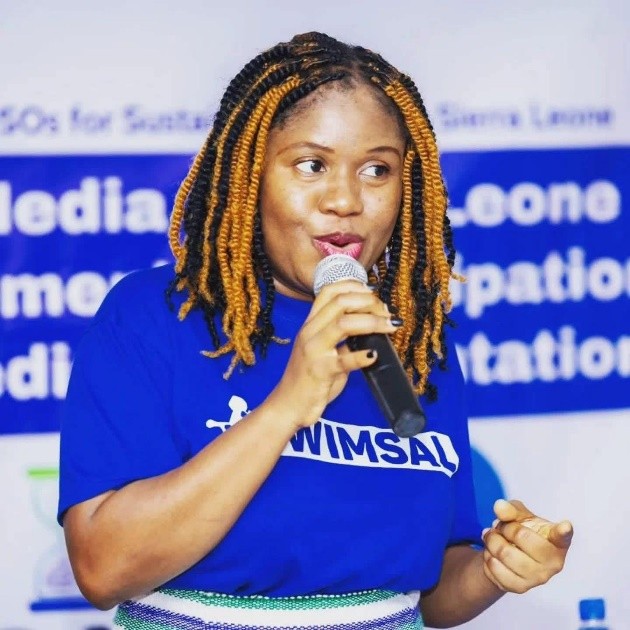
The findings have reignited debate about the long-neglected welfare of journalists, many of whom play a critical role in democratic accountability while living in financial uncertainty. However, the President of Women in the Media Sierra Leone (WIMSAL), Eastina Taylor, has warned that the statistics only tell part of the story, arguing that female journalists face deeper, more complex challenges that go beyond low pay.
Taylor acknowledged the deplorable welfare conditions highlighted by MRCG but stressed that women in the media are disproportionately affected. She explained that female journalists operate at the intersection of poor labour standards and gender-based discrimination, making their professional environment particularly hostile.
“Female journalists encounter sexual harassment and gender-based violence both in newsrooms and in the field,” Taylor told MRCG. “These abuses come not only from news sources and members of the public, but also from colleagues, supervisors, and increasingly from online trolls.”
Beyond harassment, Taylor said women journalists are systematically denied opportunities for career advancement. She noted that despite having comparable skills, experience, and professional capacity as their male counterparts, women are often excluded from senior editorial and managerial positions. Instead, they are confined to junior roles with limited influence over editorial direction and newsroom decision-making.
She further criticised the practice of assigning female journalists almost exclusively to so-called “soft beats” such as lifestyle, health, or social issues, while high-profile political, investigative, and security stories are reserved for men. According to Taylor, this not only stunts professional growth but also reinforces harmful stereotypes about women’s capabilities in journalism.
Despite these challenges, Taylor highlighted ongoing efforts by WIMSAL to address the situation. She acknowledged the organisation’s partnership with MRCG and Purposeful in delivering digital safety training for women journalists, aimed at equipping them to respond to online harassment, cyberbullying, and digital surveillance.
She also disclosed plans to launch a nationwide campaign and public dialogue to push for compliance with anti-sexual harassment guidelines within media institutions. As part of this initiative, WIMSAL is advocating for the establishment of confidential reporting mechanisms to protect victims and encourage accountability without fear of retaliation.
Taylor cited a recent case in which WIMSAL has taken steps to approach the ECOWAS Court of Justice on behalf of a member who was allegedly wrongfully dismissed, describing it as part of a broader strategy to challenge impunity within the media sector.
She concluded by emphasising WIMSAL’s continued advocacy and policy engagement with media owners, regulators, and state institutions, calling for stronger labour policies, equal pay for equal work, and a safer, more inclusive working environment for women journalists. According to her, meaningful media reform cannot be achieved while half of the profession remains marginalised, underpaid, and unsafe.