



Kadco in Expired Alcohol Probe
By Mackie M. Jalloh
Fresh questions are mounting over Kadco’s handling of large volumes of industrial ethanol after regulators uncovered what appears to be a disturbing pattern of delay, missing documentation, and unexplained movement of allegedly expired stock from the company’s warehouse in Cline Town, Freetown. What began as a routine consumer complaint has now evolved into a high-stakes public safety investigation that is placing Kadco under intense regulatory and public pressure.
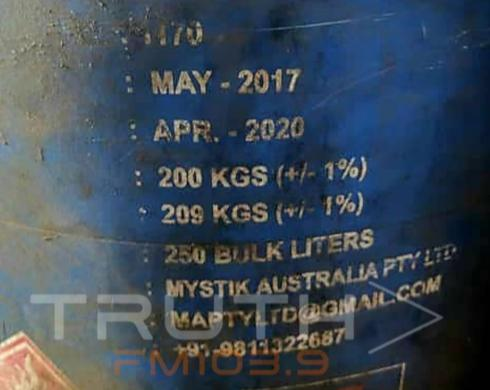
The National Consumer Protection Agency (NCPA) has raised alarm over what it describes as a slow and opaque investigation into ethanol discovered at Kadco’s facility—ethanol that was manufactured in May 2017 and officially expired in April 2020. According to the agency, more than 300 barrels of the chemical were identified during an initial inspection, sparking fears that expired materials could be repurposed for the production of alcoholic beverages sold to the public.
Those fears escalated dramatically when a follow-up visit revealed that the bulk of the barrels had vanished.
“On our first inspection, we documented over 300 barrels of expired ethanol,” said Edward Komeh, Deputy Executive Director of the NCPA. “When we returned, only 47 barrels were left. That raises very serious questions about what happened to the rest and whether the public has been exposed to unsafe products.”
The discovery prompted the NCPA to formally petition the National Consumer Protection Commission (NCPC), triggering the establishment of a joint investigative committee involving the Sierra Leone Standards Bureau and Food and Feed Safety authorities. However, the NCPA says progress has been hampered by Kadco’s failure to promptly submit critical import and inventory records, including the Bill of Lading needed to verify the quantity and origin of the ethanol.
Komeh disclosed that repeated reminders were sent to Kadco, including a formal follow-up on 8 January 2026, the same day officials noticed the sharp reduction in the number of barrels. “Without these documents, it is impossible to establish accountability,” he said, warning that delays increase the risk of expired chemicals entering the consumer market.
Kadco, for its part, has maintained a low profile. Its public relations representative, Joseph Musa, declined to address the allegations directly, stating only that the matter is “under investigation and being handled by the Commission.”
The NCPC has pushed back against claims that it is shielding the company. CEO Lawrence Bassie confirmed receipt of the complaint and said a committee was constituted on 17 December 2025. He argued that regulatory processes require time and due diligence, noting that Kadco was given until 12 January to submit the requested documentation.
“We are not here to protect any company,” Bassie said. “Our mandate is to protect citizens and ensure safety. When the agency requested an immediate inspection, I personally went to the warehouse with them.”
Still, critics argue that time is a luxury consumers cannot afford when potentially unsafe substances are involved. Bernadette Ballay Fullah, NCPC’s Consumer Relations Manager, later confirmed that Kadco has now submitted documents, which are under review. She said laboratory testing will be conducted before the public is informed of the findings.
At a press briefing, Kenneth David Kamara, Senior Laboratory Analyst at the Sierra Leone Standards Bureau, sought to clarify the technical debate, stating that while ethanol does not “expire” in the conventional sense, it can lose regulatory compliance or become unfit for its intended use. “If it fails safety standards, it must be destroyed,” he emphasized.
For the NCPA, the core issue remains unresolved: where did the missing barrels go, and were consumers put at risk? “This is about public health,” Komeh stressed. “Until every barrel is accounted for, the concern remains.” As laboratory tests are awaited, the Kadco case has become a litmus test for consumer protection enforcement in Sierra Leone—one that could determine whether corporate accountability truly outweighs commercial interests